SSL/TLS Server Test
A TLS scanner written in PHP: protocols, cipher suites, trust in four root stores, revocation, handshake details and known weaknesses, with a grade from A+ to F.
Since
2026
Part of
troubleshooting.tools
Technologies
The Challenge
Well-known TLS tests are either external services with their own queue or command-line tools. Many judge trust against a single root store only, do not know about revoked intermediates, and report “safe” when a server simply does not answer a probe.
The Solution
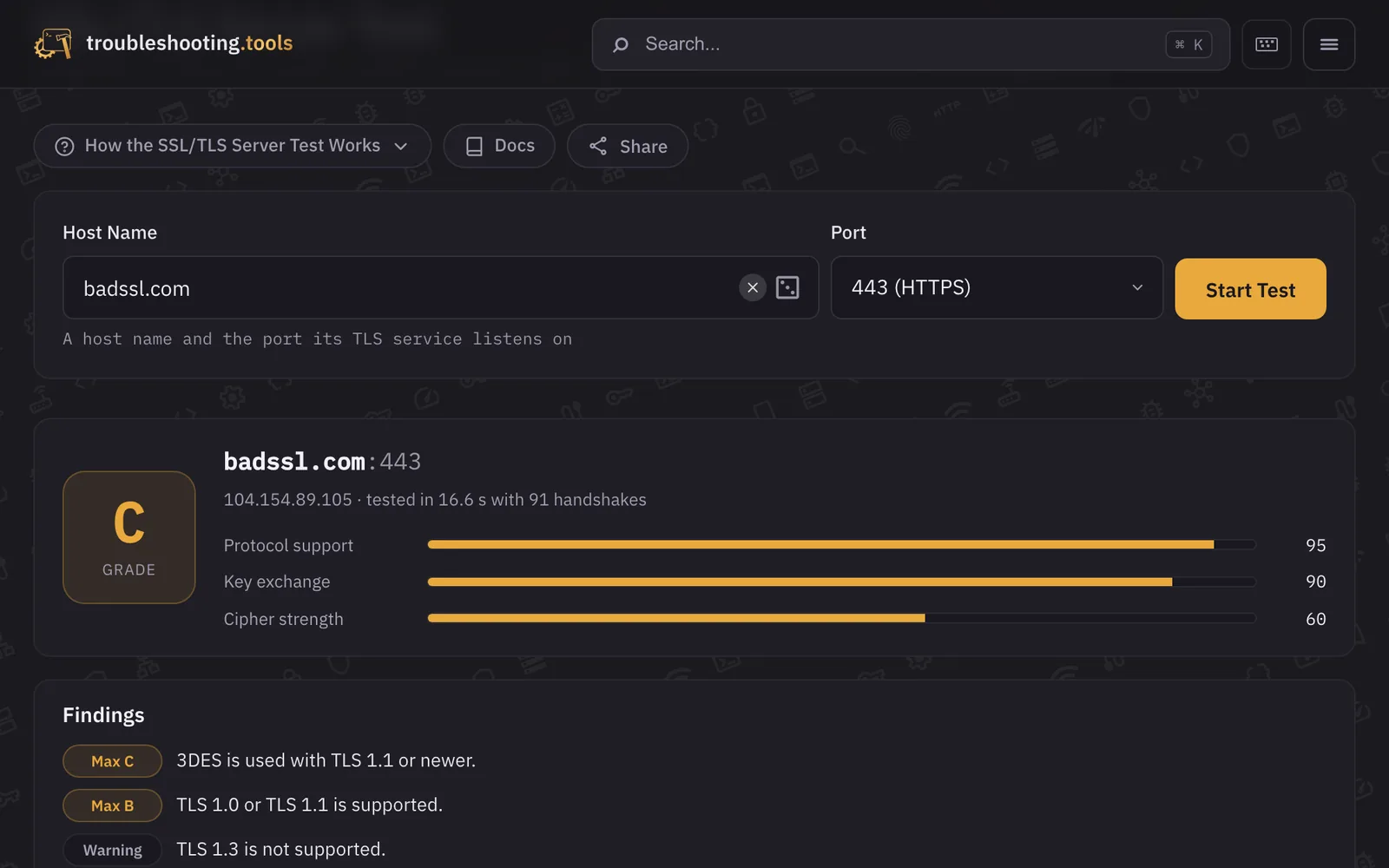
The scanner is written in plain PHP, with hand-built ClientHellos and its own TLS record layer for TLS 1.0 to 1.2. Trust is checked separately for Mozilla, Microsoft, Apple and Chrome; the grade follows Mozilla. Results stream in step by step, and every finding says how far it caps the grade.
What is checked
Protocols and handshake
SSL 2.0 to TLS 1.3, every cipher suite per version, selection order and key exchange groups including the post-quantum hybrid X25519MLKEM768. Plus secure renegotiation, extended master secret, downgrade protection, OCSP stapling, session resumption, early data and tolerance of GREASE and large ClientHellos.
Certificate, trust, revocation
Chain certificate by certificate, trust separately for four root stores from the CCADB, intermediates revoked in the CCADB excluded. Revocation via OCSP with signature check, otherwise via CRL. Grade T for untrusted, M for name mismatch.
Known weaknesses
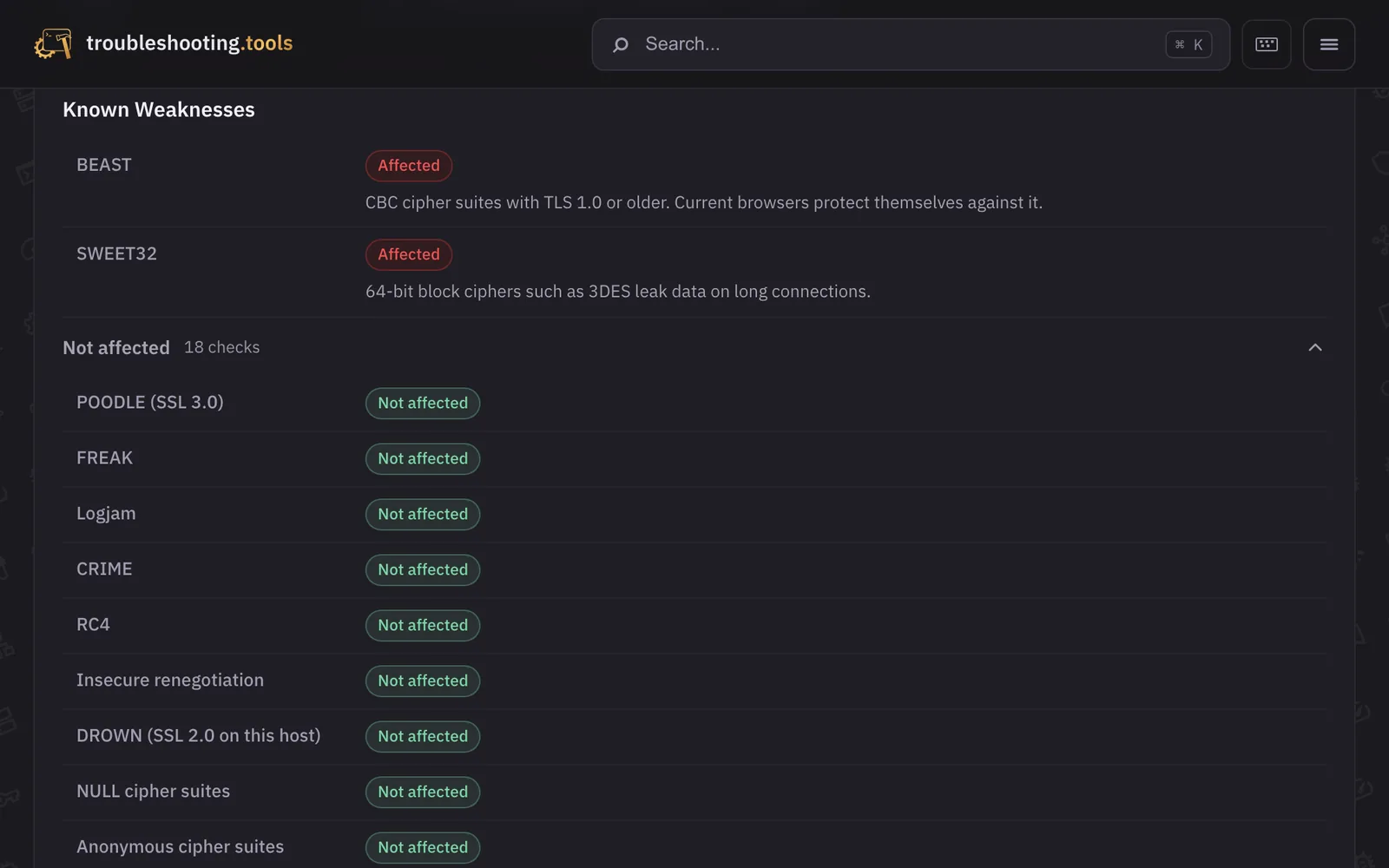
Derived: POODLE, BEAST, SWEET32, FREAK, Logjam, CRIME, RC4, DROWN and more. Actively probed: Heartbleed, CCS injection, Ticketbleed, ROBOT, POODLE-TLS, GOLDENDOODLE, Zombie POODLE and client-initiated renegotiation. Every answer is affected, safe, inconclusive or not applicable.
Data sources
The root stores come from the Common CA Database (CCADB), one report per vendor plus the list of revoked intermediates, refreshed weekly (CDLA-Permissive-2.0). The HSTS preload list is the one Chromium actually ships, also refreshed weekly; coverage by a parent name or a TLD is recognised too. CAA records are checked per RFC 8659. The server resolves names via DNS over HTTPS. The grade follows the SSL Labs rating guide but is its own grade.
Honest answers
An alert counts as an answer, silence is asked again, and if it stays unclear the result is “inconclusive” instead of “safe”. Results are kept for one hour per host and port; a repeat shows the kept result with the test time. Besides direct TLS, the test covers the STARTTLS ports for SMTP, IMAP and POP3. There is no public API. Outbound connections are guarded and fail closed.
Platform and operations
The tool runs on the same platform as every tool on troubleshooting.tools: plain PHP behind nginx in one Docker image, a shared layout and router, a strict Content Security Policy per route and no CDN. GitLab CI tests every branch, builds the images with Docker-in-Docker and deploys them; structured logs and external uptime checks monitor operations.
Privacy
The test runs from the server; the tested server sees the server, not the visitor. For the rate limit only a keyed HMAC-SHA256 of the address is stored, never the address itself. Host and port appear in the server log. Kept results contain only what the server shows to anyone. The page loads nothing from third parties.
Results
A standalone TLS scanner that judges trust as differentiated as the major browser and OS vendors, takes revocation and preload seriously, and would rather say “inconclusive” than report false safety.
Gallery
Screenshots of the public site with example targets.