gamesrv.disisto.de
A platform for Counter-Strike servers, built entirely as infrastructure as code: container orchestration, self-written server plugins, central single sign-on and a pipeline that automates everything from git push to a verified deploy.
Live since
Autumn 2026
Scope
Infrastructure, CI/CD, plugins, web app and operations
Technologies
The Challenge
gamesrv replaces a self-built bare-metal setup that ran from 2021 to 2023. Servers, plugins and a homemade PHP panel were configured by hand, which made updates and troubleshooting costly. The goal was a platform that runs several games and modes in parallel, updates itself, can be rebuilt from Git at any time and follows the principle of least privilege.
The Solution
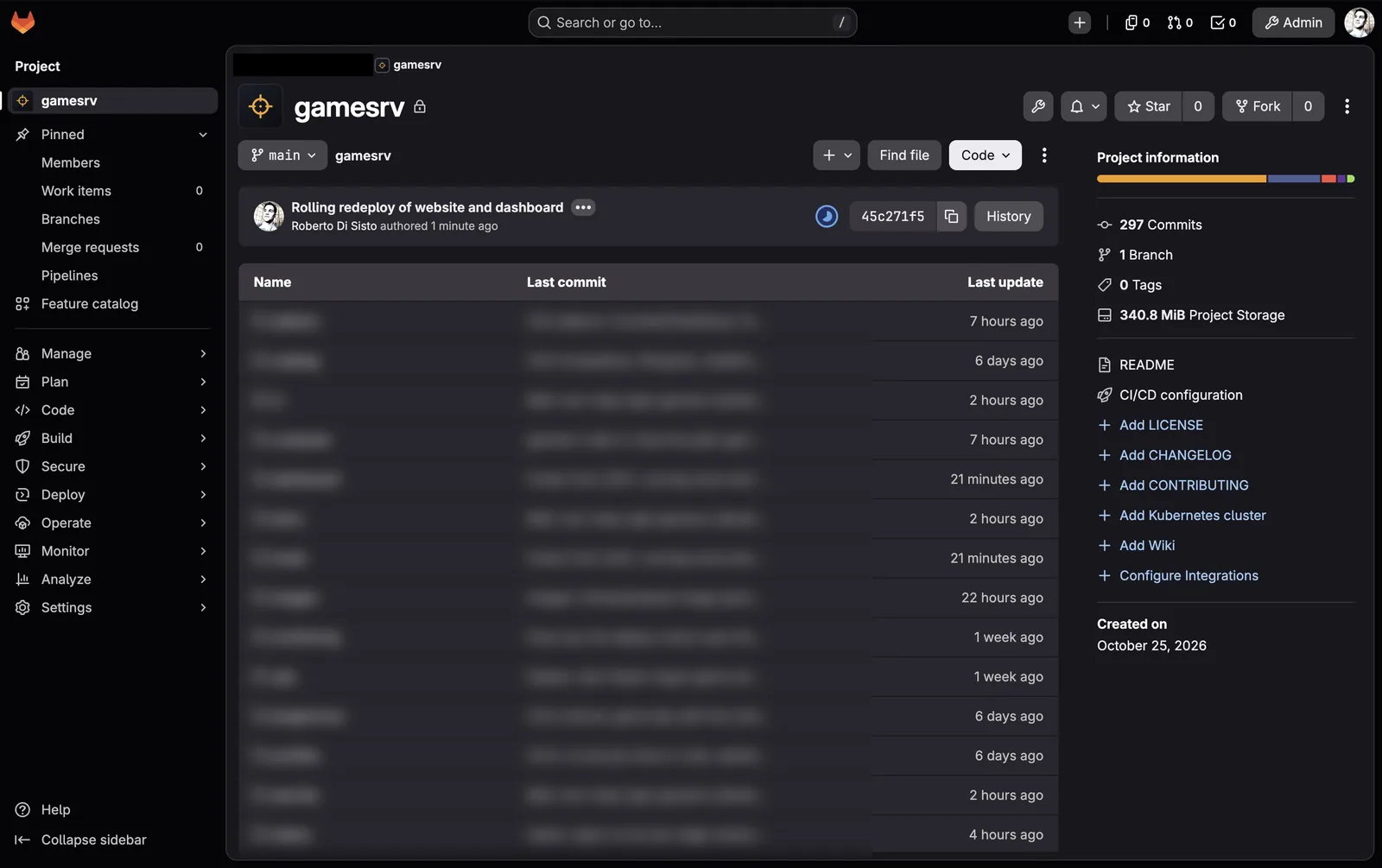
Everything lives in one Git repository: server catalog, compose files, game config per mode, Dockerfiles, plugin sources, addon manifests with checksums, monitoring rules and docs. GitLab CI builds the images from it, checks them and deploys them. A Laravel application serves the public website and the dashboard. Host-specific values sit in one file per host, so moving to a new host means pointing CI at it and restoring the data.
GDPR privacy: players control their own data
Privacy is part of the architecture, not an add-on: playing needs no account at all, only what is needed is stored, and anyone with an account manages their data themselves, without an admin and without a request.
Delete your own account
In the dashboard, without an admin, optionally including all statistics. gamesrv deletes its own data first, then Keycloak deletes the account immediately after asking for the password again. In matches the player shows as “deleted player”, so the other players' results stay intact.
Control your visibility
Separate switches for the website and the game. A player hidden on the website has no public profile. Steam IDs never appear publicly; profile URLs use a random key.
Access
Signed-in players see their stored data in the dashboard: stats, rank, play time and notification settings. A full copy is available on request.
Data minimisation
No player IP addresses, only Steam ID, name, server and times. Sessions and daily stats 90 days, notification log 7 days, web server logs about 15 days. Without an account the contact form is enough, and the operator deletes all game data for a Steam ID in one action.
Consent
Analytics only with consent: self-hosted Matomo, measured server-side, without a tracking script, revocable at any time. E-mail and push alerts are opt-in, and every e-mail has one-click unsubscribe (RFC 8058).
No third parties, hosted in Germany
No trackers, no ads, no CDNs, only necessary cookies. Runs on own hardware in Germany. Backups are encrypted on separate servers in Germany and kept for at most one year; after that, deleted data is gone for good.
Game server orchestration
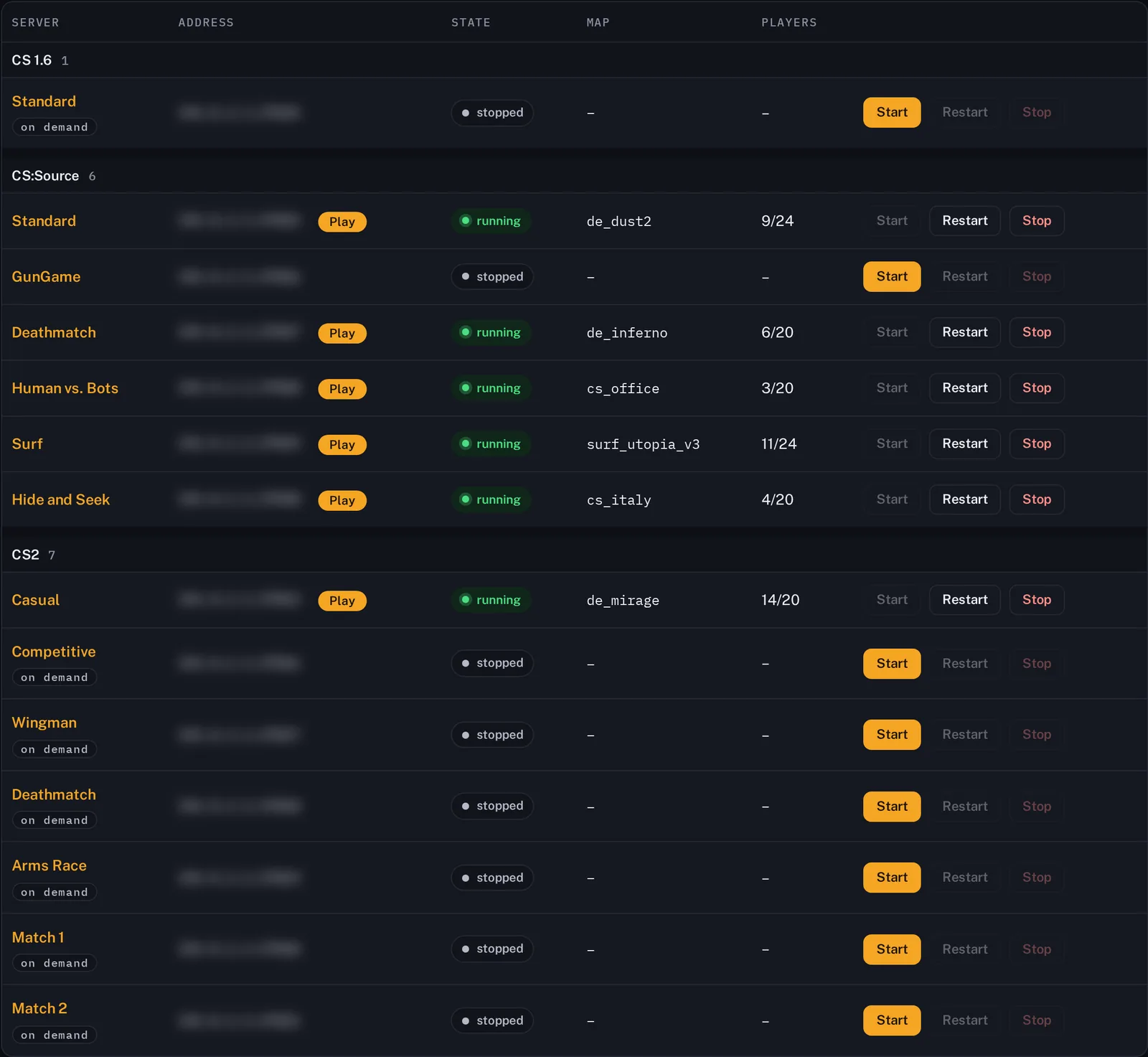
Each of the 12 public modes and the 2 match servers runs as its own container with its own address, all in parallel. Which servers exist is a catalog in Git; CI renders it into Docker Compose services. The dashboard cannot invent servers, it only starts and stops what Git defines.
There is one image per game on a pinned Debian base. The large game files are not baked in: an updater container per game regularly installs Valve's updates via SteamCMD into a shared volume that the servers mount read-only. A new build is picked up automatically once a server is empty. A running match is never interrupted.
Signed-in players start on-demand servers from the website; an idle reaper stops them again after 30 minutes without players. Always-on servers come back by themselves after a host reboot, staggered one per minute. The web app never gets full Docker access: it talks through a filtering proxy that only allows start, stop and restart of game server containers plus read-only queries.
CI/CD with Docker-in-Docker
Every build job in GitLab CI gets a fresh, throwaway Docker-in-Docker daemon. Images are built in isolation, with nothing left over from earlier jobs. Their tag is a hash of all inputs (Dockerfile, sources, addon versions and a monthly salt), so a pipeline rebuilds only what changed. A monthly run rebuilds everything without cache, so OS security updates land even without code changes. Child images, such as the CS2 match image, pull their parent from the project's own registry within the same pipeline.
Pipeline
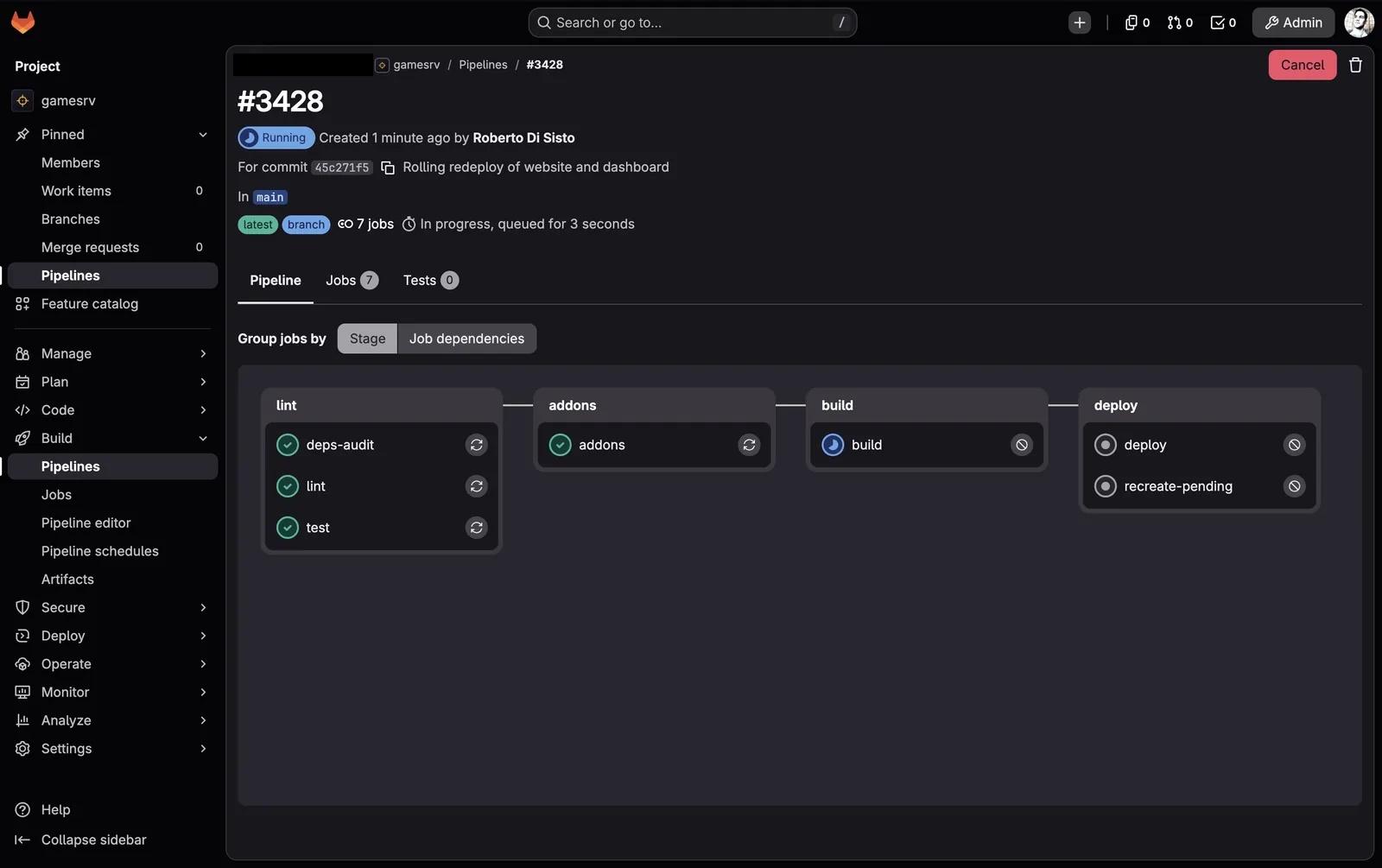
- Lint, PHPUnit tests and a dependency vulnerability audit that blocks the deploy
- Build of the changed images only
- Vulnerability scan of the images with Trivy (high and critical)
- Deploy over SSH
- Automated post-deploy security and health checks, with rollback on failure
Third-party addons are mirrored into the project's own package registry and checked against pinned SHA-256 sums, so builds do not depend on outside download sites. Versions and image digests are pinned everywhere; there are no “latest” tags. Secrets are never in Git or images; CI reads them from a secrets vault at deploy time.
Own plugins and stats pipeline
For CS:Source, nine plugins were written in SourcePawn on SourceMod. They replaced older community plugins step by step. All plugins, including community ones such as GunGame and the anti-cheat, are compiled from source in CI; no old binaries are carried over.
gs_statspoints, kills, headshots, accuracy, damage and hit zones, split by humans and botsgs_damagedamage reportgs_botsbot managementgs_moneymoney rulesgs_serversin-game server switcher (!servers)gs_mapchoosermap vote, rtv, nominategs_noticesnotices and congratulationsgs_bansbansgs_adminsadmin rights
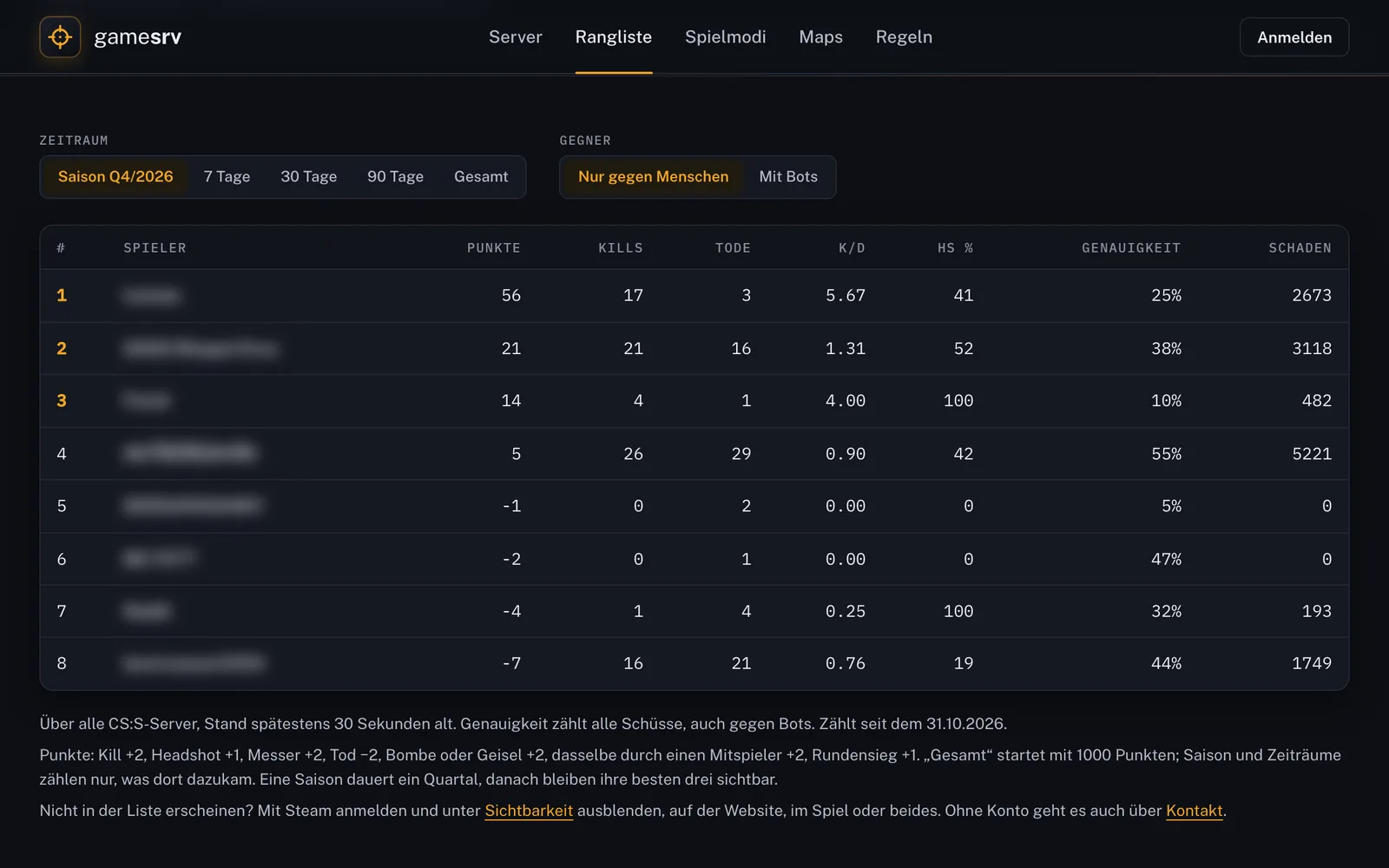
The stats plugin only counts in memory. Every 30 seconds the dashboard pulls the counters since the last pull from each busy server over the remote console and resets them, so nothing is counted twice. PostgreSQL is the single source of truth. The top 10 and each player's rank go back to the servers, so !rank and !top in the game show exactly the numbers on the website.
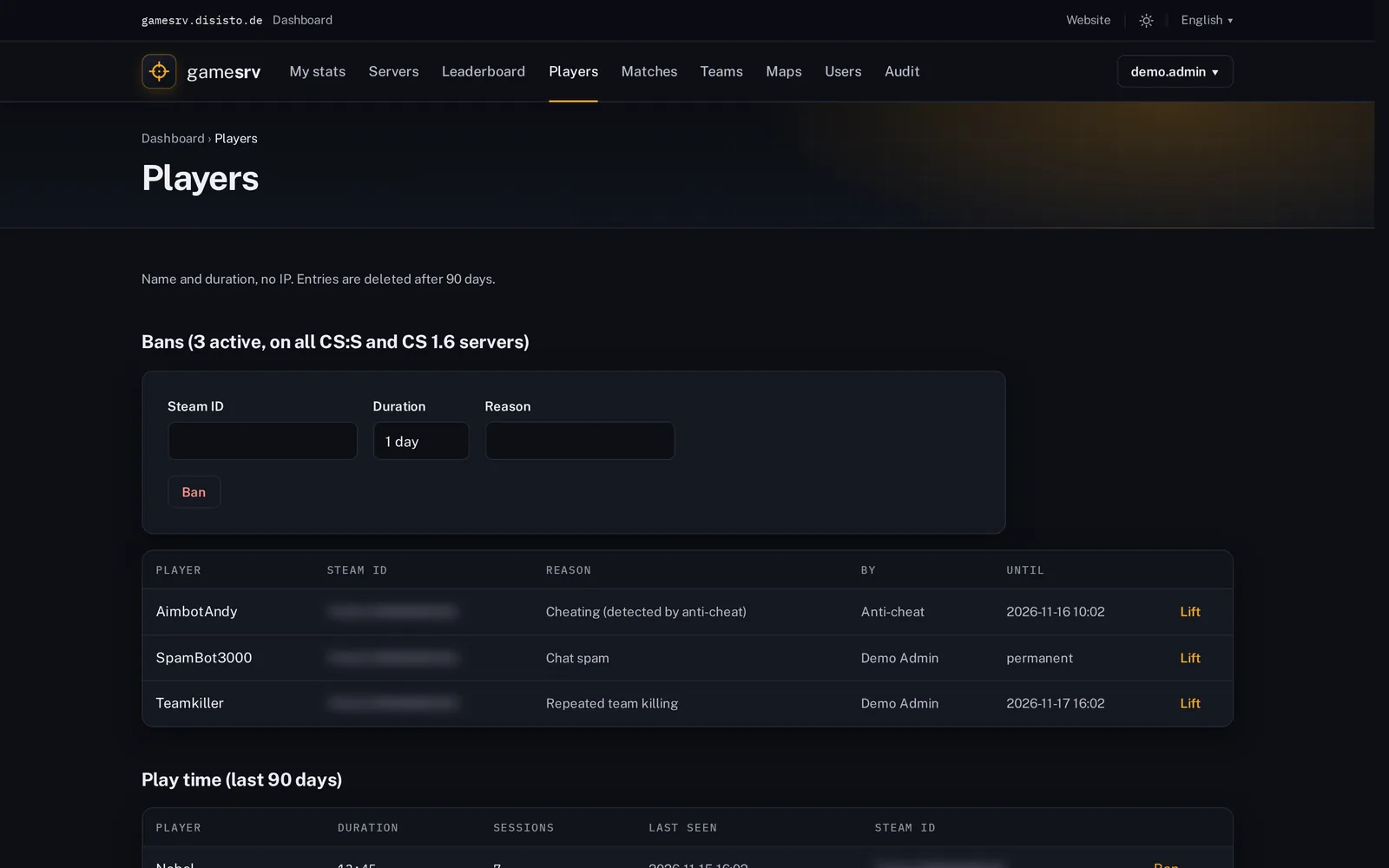
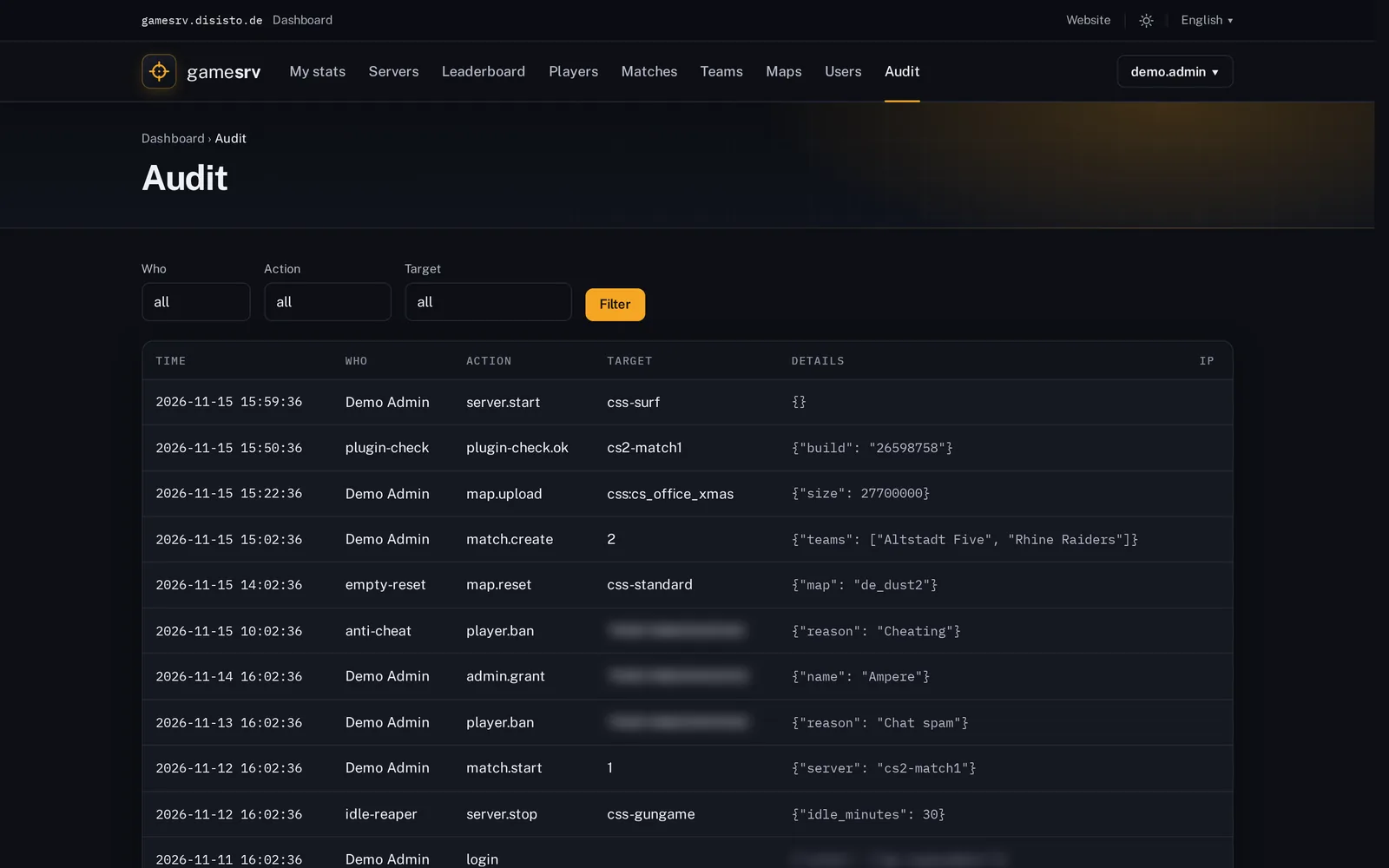
An in-game ban, by an admin or the anti-cheat, goes into a queue. The dashboard turns it into a central ban with an audit log entry and removes the player from every CS:Source and CS 1.6 server within 30 seconds. The ban survives restarts and deploys. For the server switcher, the dashboard tells the servers which others are currently running.
CS2 matches and plugin check
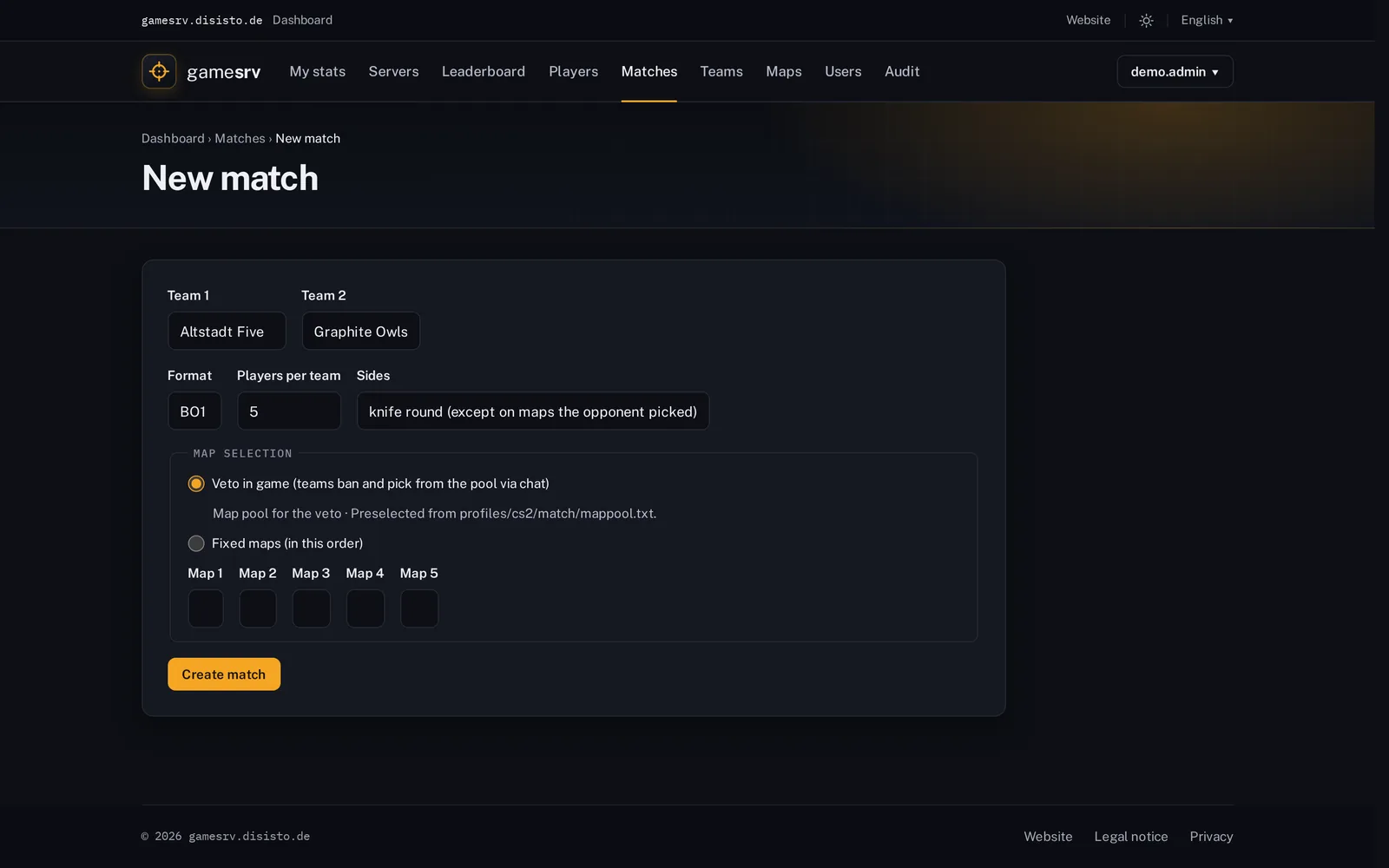
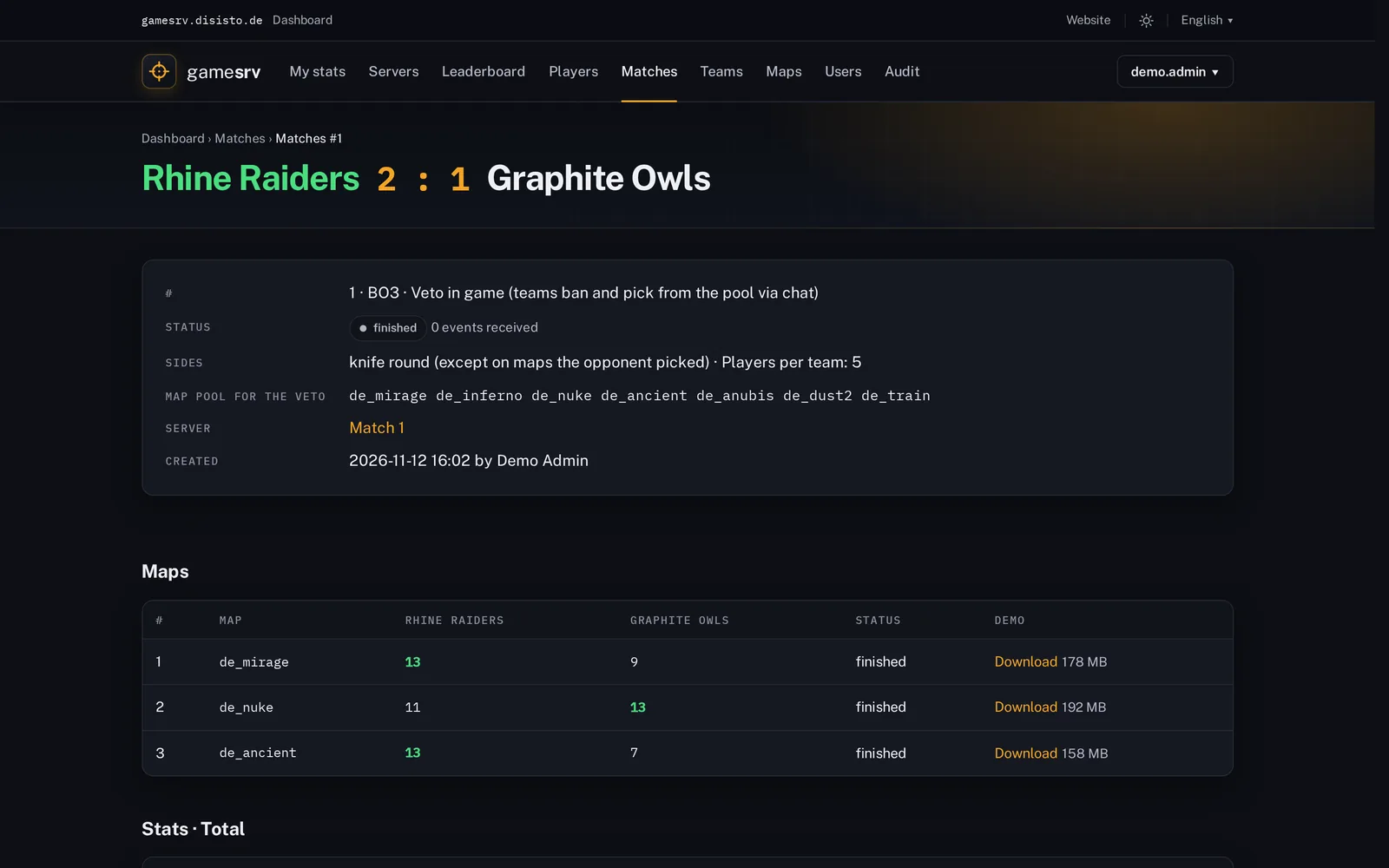
Matches run on the open-source MatchZy plugin on CounterStrikeSharp (C#/.NET) and Metamod; the integration with the dashboard is our own: teams, best of 1/3/5, knife round or fixed sides, map veto, automatic results, statistics and demos. After every CS2 update or new match image, the dashboard boots a match server, checks over the remote console that all three addons are loaded and records the result per combination of game build and image. If the check fails, matches are blocked and an alert fires; after a fix the next check lifts the block by itself. The public servers run without these addons, so a Valve update cannot take them down.
Single sign-on with Keycloak
The website and dashboard sign in to the central disisto.de Keycloak via OpenID Connect (authorization code flow), with their own realm and a login theme in the site's design, in German and English. Steam is configured in Keycloak as an identity provider; the app only ever talks OIDC to Keycloak, never directly to Steam. Keycloak roles become permissions in the app, from superadmin down to single rights such as matches, players or server control. Players who sign in through Steam get the user role only; admin roles require a password and a one-time code.
Web app
The website and dashboard are one Laravel application with PostgreSQL and nginx, bilingual with translated URLs, hreflang and structured data. A queue worker processes map uploads in the background; the Laravel scheduler runs the 30-second player and stats tick, notifications, matches, the plugin check and the idle reaper. “Someone is playing” alerts go out by e-mail or as Web Push with VAPID, limited to one per server every three hours. For zero-downtime deploys, two instance pairs run behind the reverse proxy and are renewed one after the other; tested with about 300 requests during both switches and zero errors. Custom maps are served by a separate, bandwidth-limited FastDL container. Fonts and assets are self-hosted, and the Content Security Policy is strict.
Operations
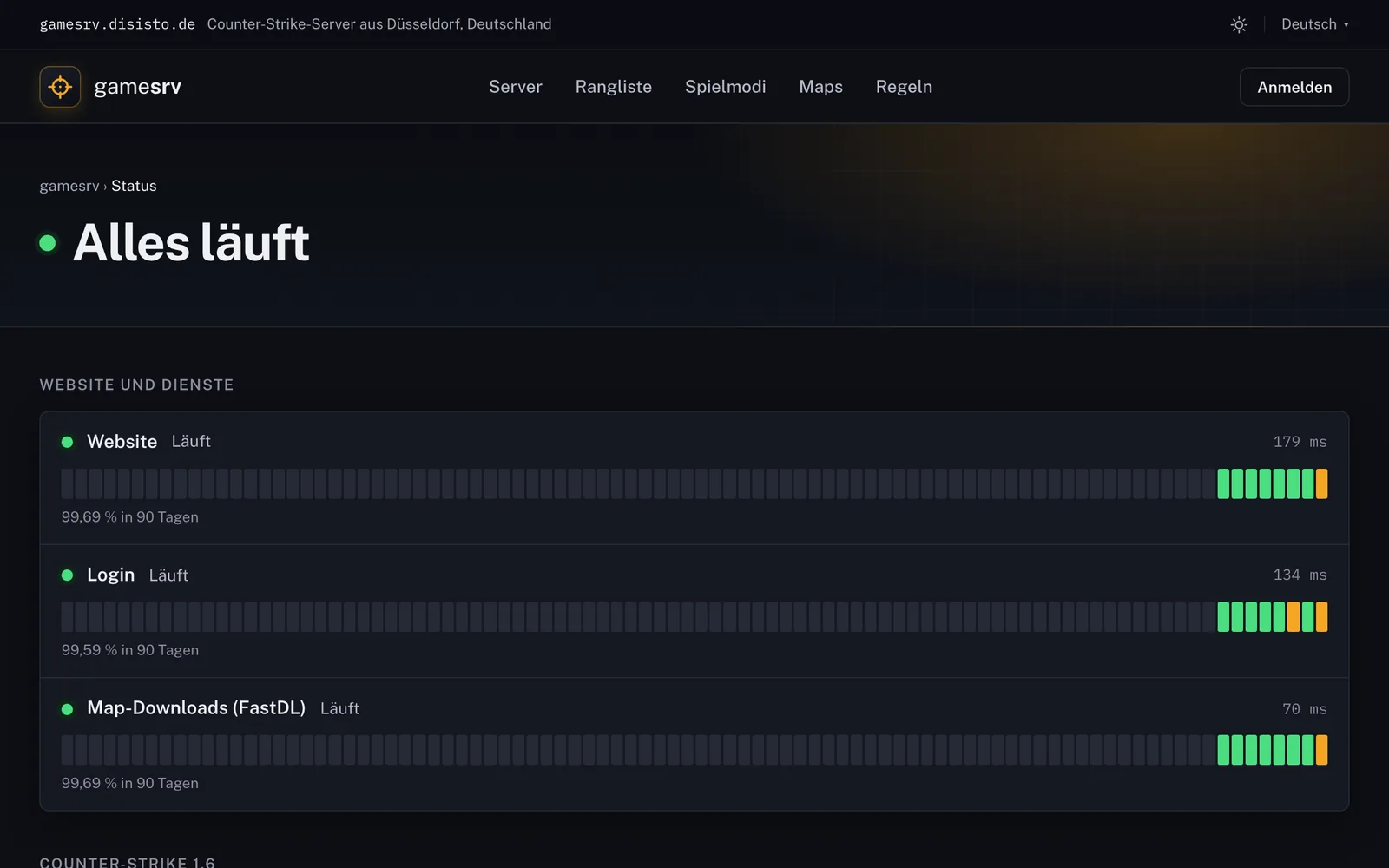
The database and map data are backed up encrypted off the host, with regular automated restore drills. The app exposes Prometheus metrics, and alerts cover things like a failed plugin check. A daily job reports new addon releases. The status page runs on a separate server outside the host and measures from outside: game servers, website, login and FastDL, with a 90-day history.
Built with Claude Code
The project was built end to end with Claude Code as a development partner, with me making the decisions: architecture and planning, Dockerfiles and image hardening, the CI pipeline, the dashboard and website including tests, the SourcePawn plugins, the Keycloak integration, and documentation and runbooks. Operations too: deploys with verification after every push, troubleshooting, for example when a CS2 update crashed the match servers, and security updates. Several Claude Code sessions with clearly split responsibilities (game platform, host infrastructure, identity and secrets, website) coordinated with each other. Changes affecting players or data always needed my explicit approval.
What players see
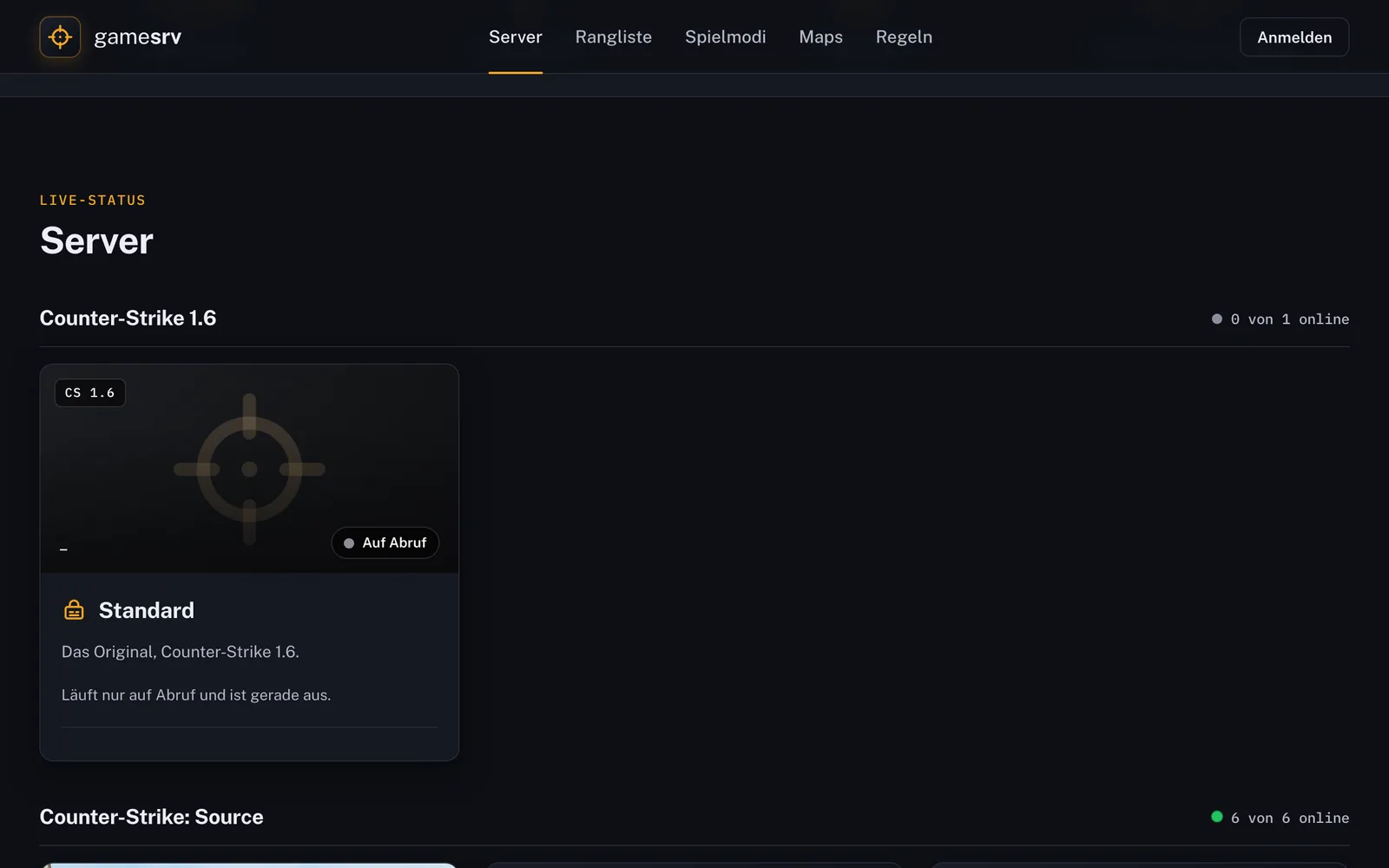
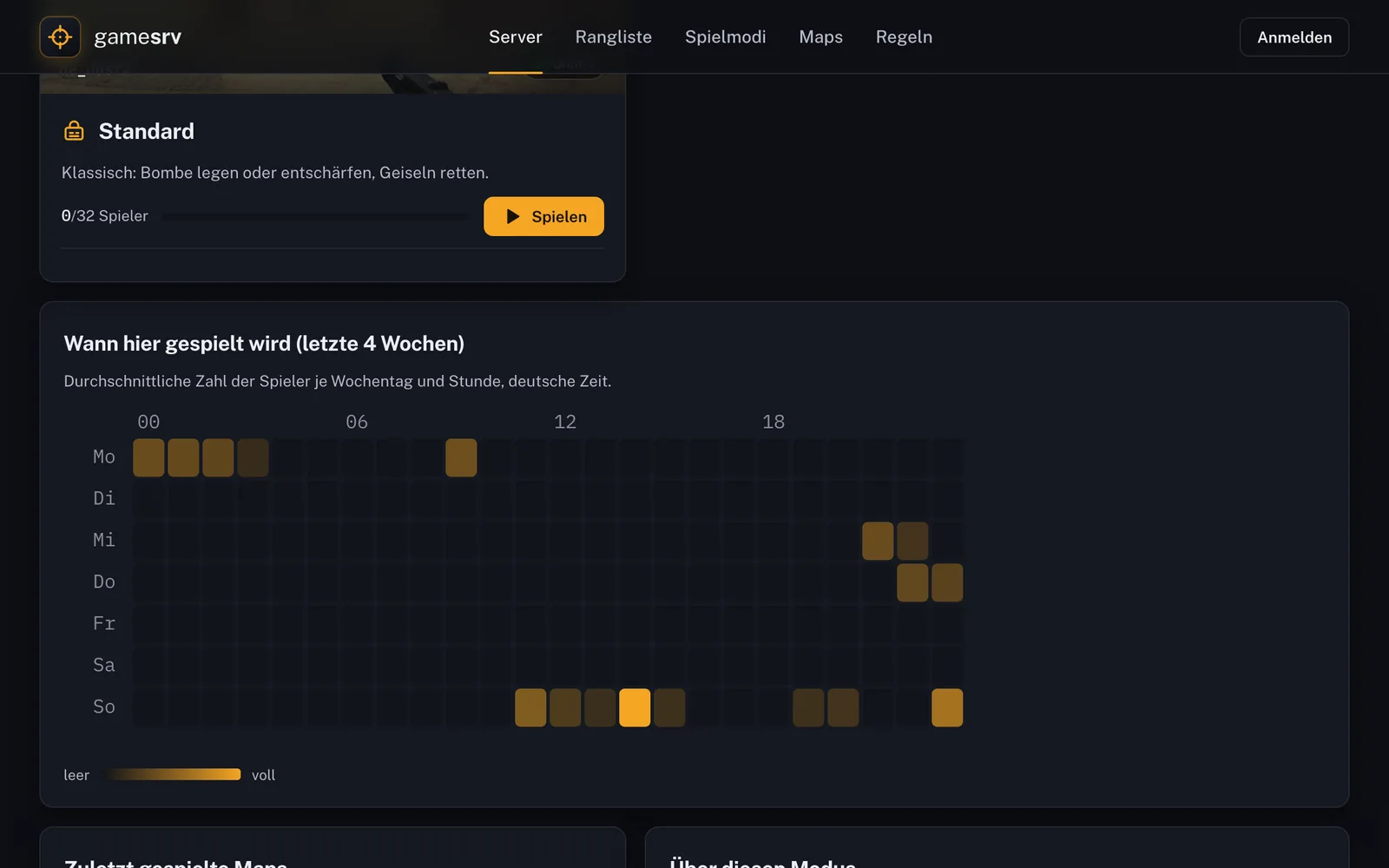
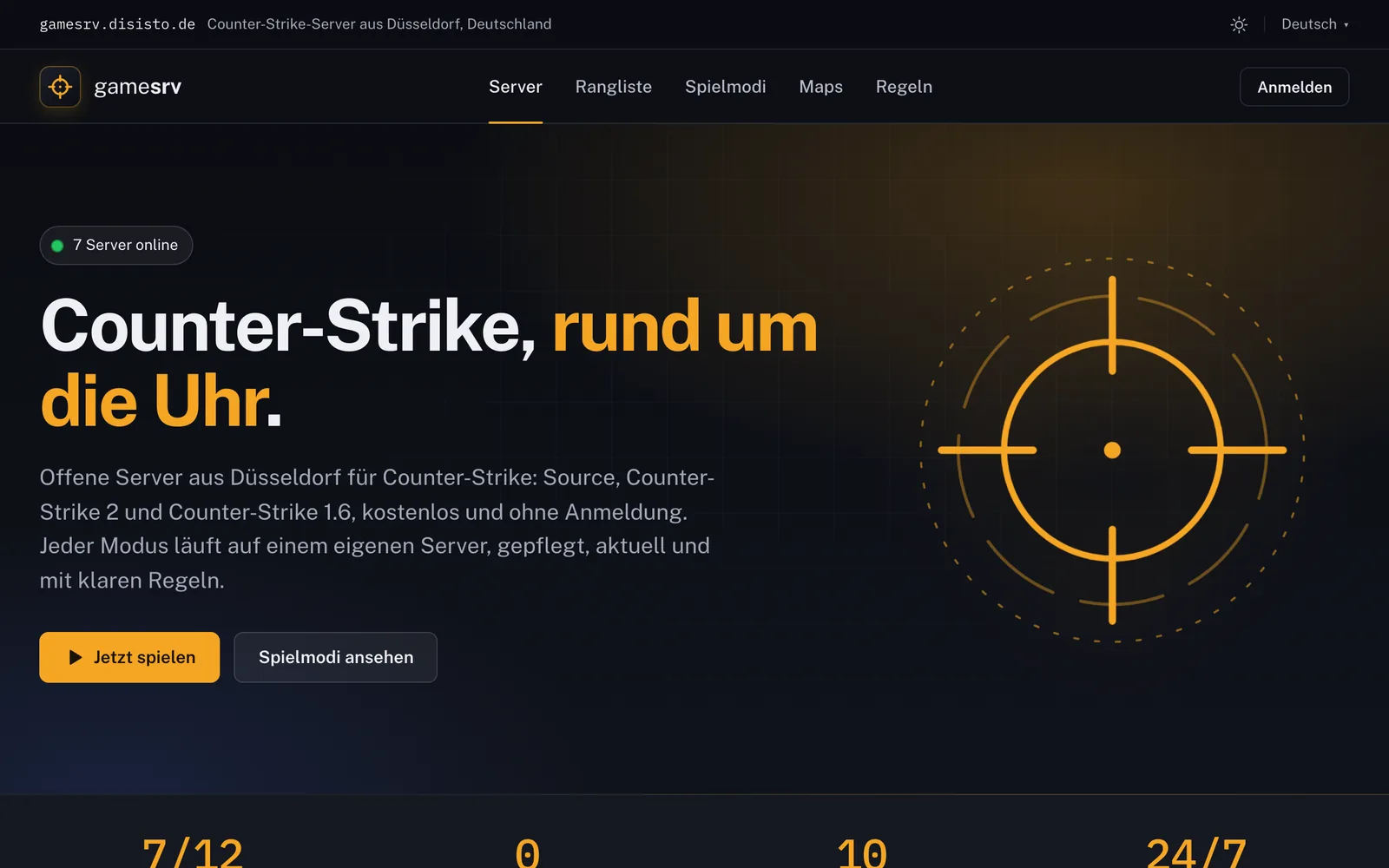
A bilingual website with the live status of every server, a page per server with a heatmap of busy times, a leaderboard with seasons and filters, player profiles with a hit-zone diagram, map statistics, rules and a FAQ. Signed-in players control their visibility on the leaderboard and subscribe to alerts when a server is in use.
Results
Since autumn 2026, three games with twelve public modes and two match servers have been running. Valve updates, security updates and deploys happen without manual work, the website switches over without downtime, and every change is traceable in Git. The platform can be rebuilt from the repository on a new host.
Gallery
The dashboard views come from the development instance with demo data; names are invented. The group path is blacked out in the GitLab images.