Enterprise Dashboard
The internal start portal of an indie game studio: one login through Keycloak, then all team apps, your own Jira issues, your personal VPN profile and the internal root certificate on one page.
Since
2025
Use
Internal, login only
Technologies
The Challenge
A small, distributed team works with many services: wiki, Git, chat, monitoring, ticketing. Everyone needs VPN access and has to install the internal root certificate on their devices. Without a central entry point, everyone keeps hunting for the same links, profiles and instructions.
The Solution
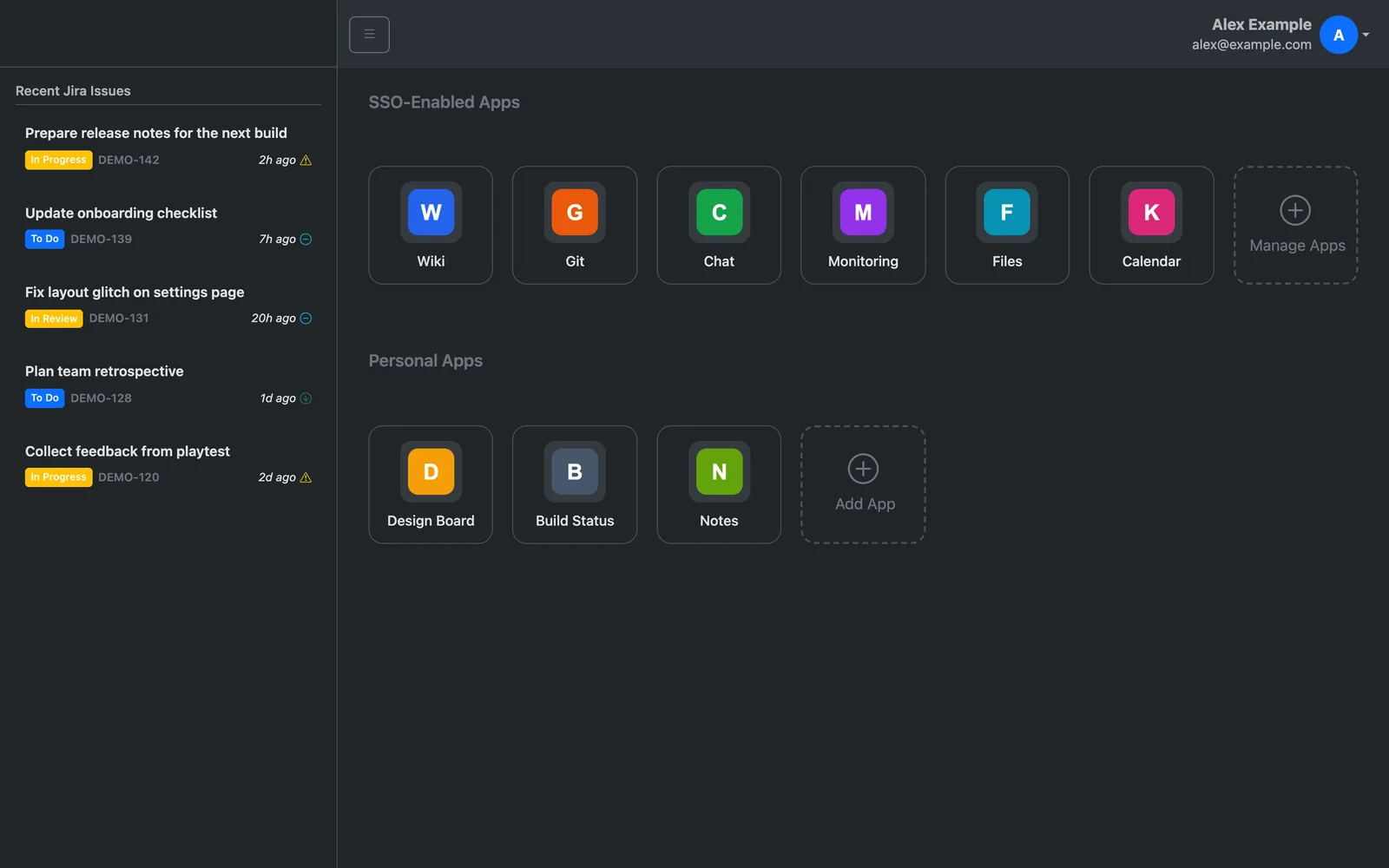
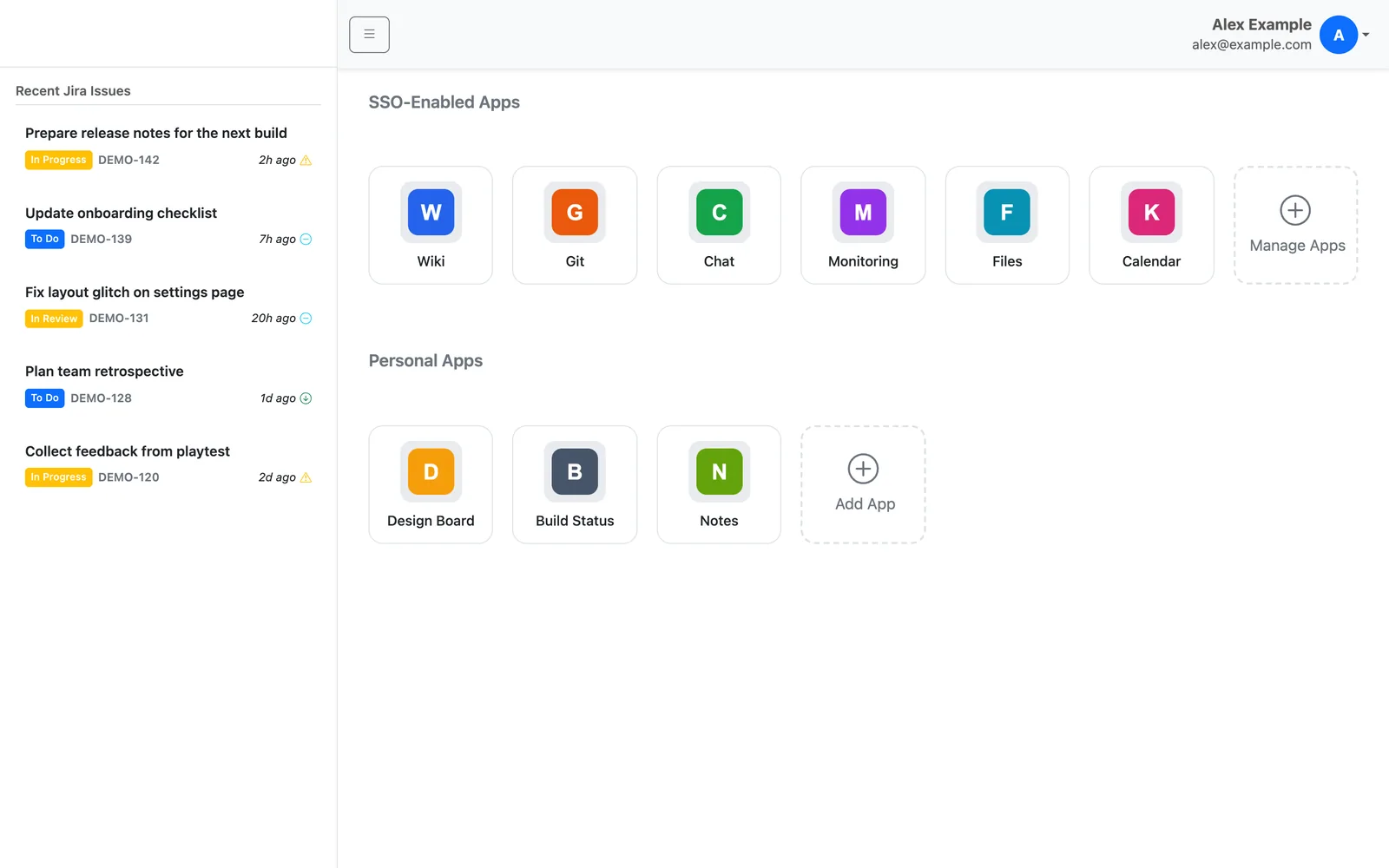
A start portal behind single sign-on: after one login through Keycloak, a single page shows all team apps, personal tiles, your own open Jira issues, the VPN profile and the root certificate with instructions. Roles from Keycloak decide who may manage the shared apps.
What the dashboard offers
App tiles
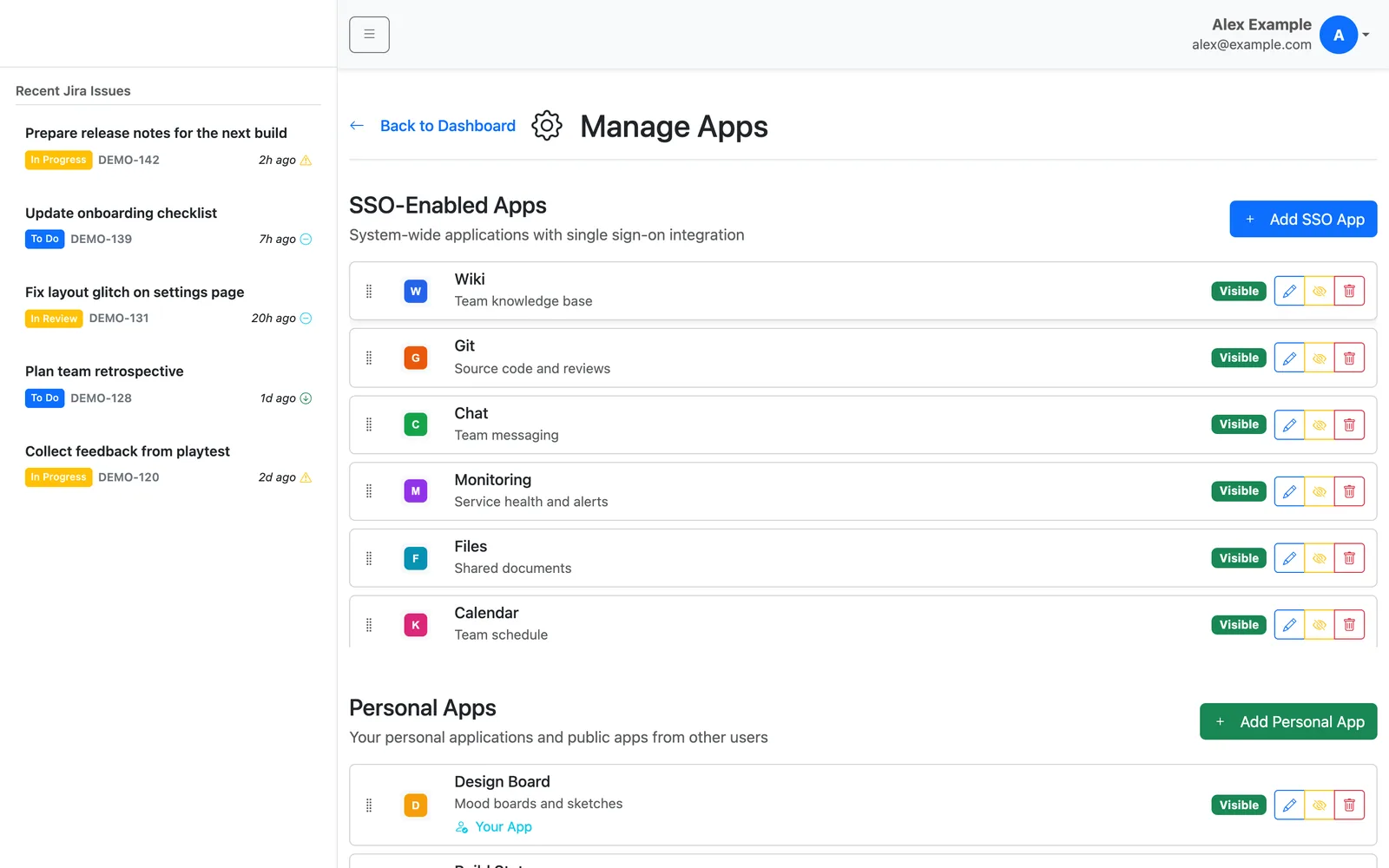
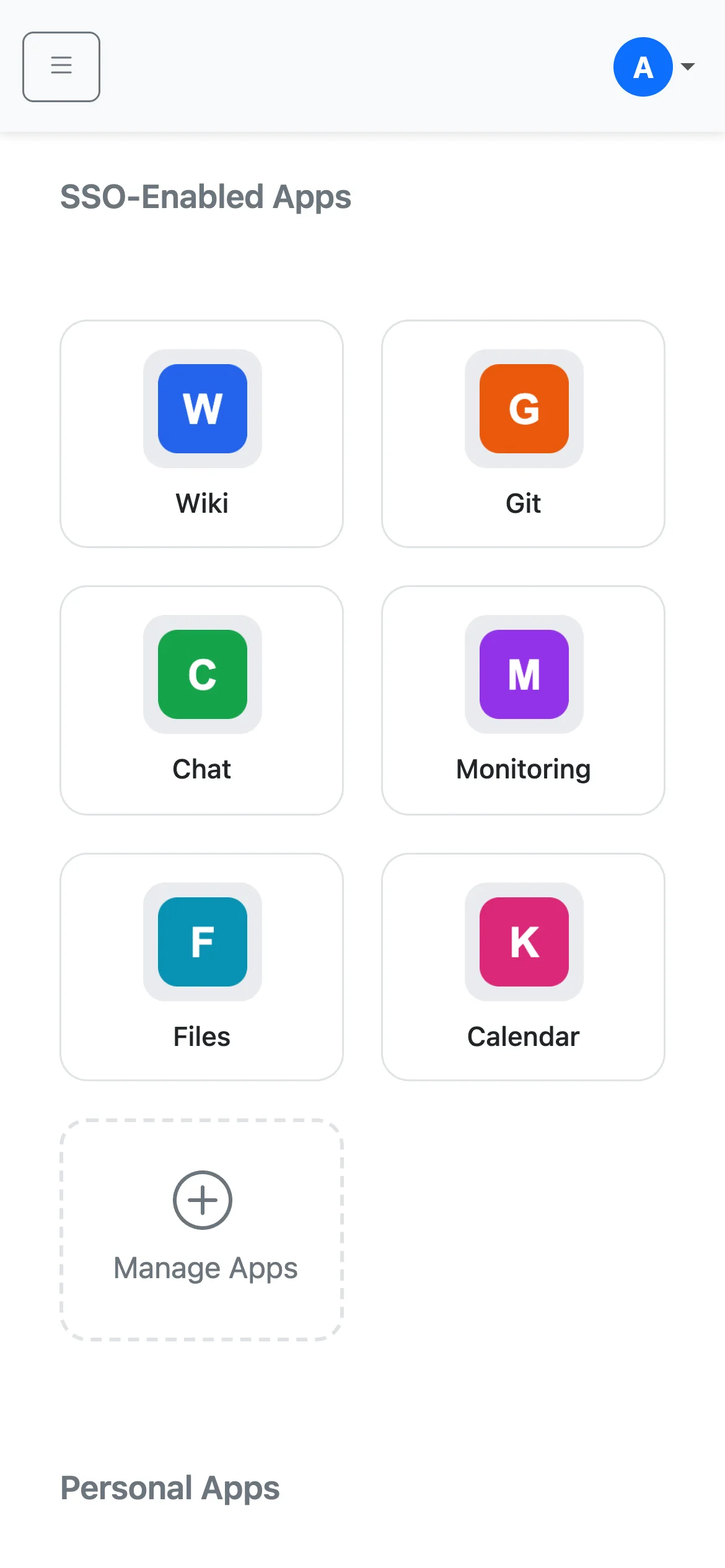
Tiles for all team apps with single sign-on, maintained centrally by admins. Plus personal tiles that can also be shared with the whole team, and per-user visibility settings.
VPN and certificate
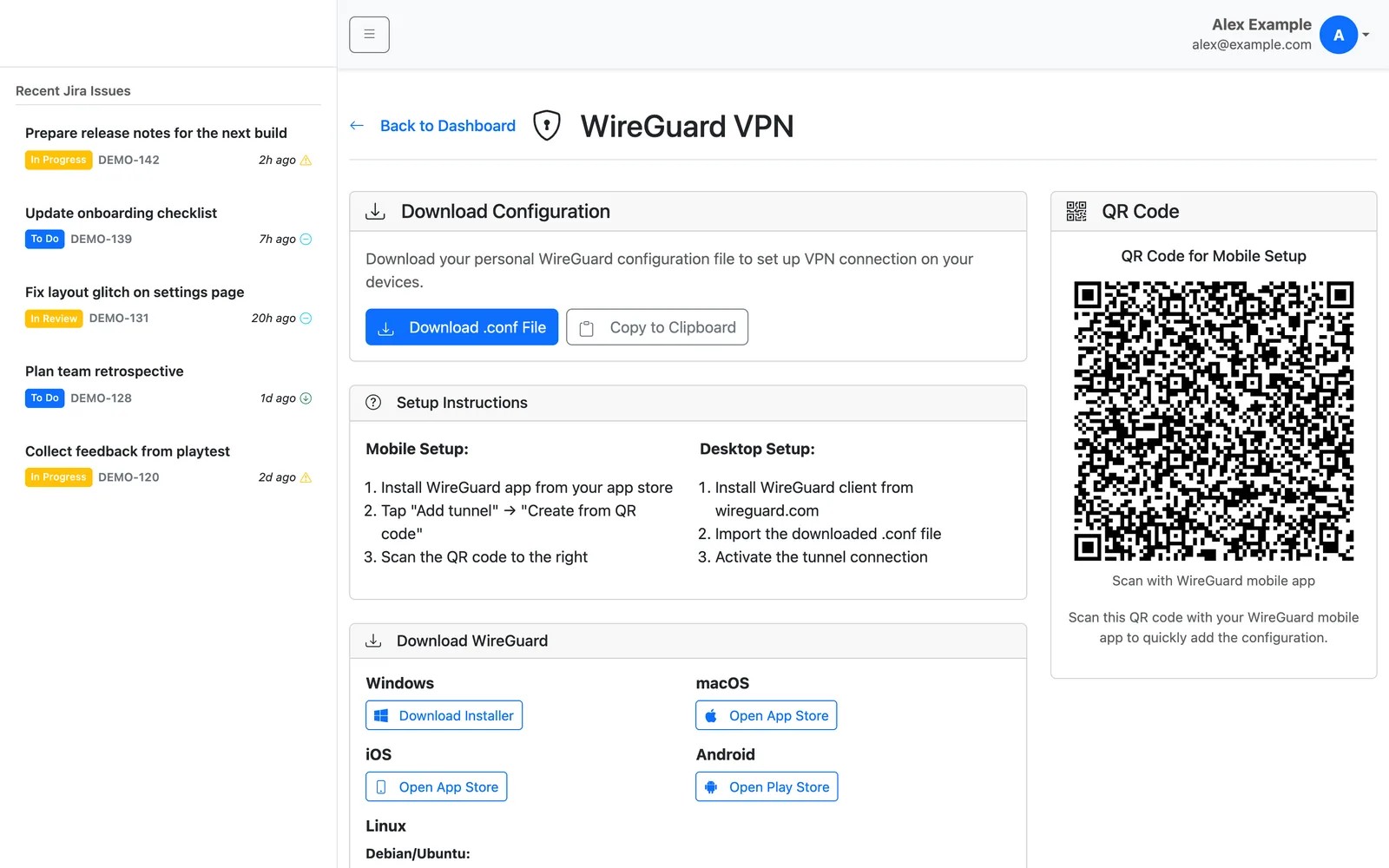
The personal WireGuard profile to download, copy or scan as a QR code with the mobile app; the QR code is generated in the browser. The internal root certificate is available for iOS, macOS, Windows, Android and Linux, each with instructions.
Jira
A sidebar shows your own open Jira issues, assigned or reported, with status and link. The query runs on the server; the API token never reaches the browser.
Single sign-on
Sign-in uses OpenID Connect (authorization code flow) against the central Keycloak, with a single-use state and a renewed session on login. Tokens are refreshed in the background, and the session ends when the account is disabled in the SSO. An admin role from Keycloak unlocks managing the shared apps. There is no user database of its own; the profile comes from the SSO.
Architecture
PHP without a framework, JavaScript without a framework and Bootstrap, all assets served by the app itself. MariaDB stores app tiles and preferences, keyed by the SSO identifier. nginx and PHP-FPM run in their own containers, and PHP-FPM is reachable only through a local socket. A strict Content Security Policy, writes only from the app's own origin and output escaped throughout.
Build and operations
GitLab CI builds the container images on every change, each with the operating system's current packages, scans them with Trivy and deploys them; nothing is changed by hand on the server. Secrets come from a central secret manager at deploy time, never from the repository or the image. The dashboard runs behind the central reverse proxy and is covered by the central monitoring. November 2026 brought the move into a GitLab repository with CI-built containers, plus a security review and hardening.
Privacy
No analytics and no tracking. Only app tiles and preferences are stored; all profile data comes from the SSO. The Jira query runs on the server, so the API token never reaches the browser.
Results
A central entry point that saves the team from hunting for links, VPN profiles and certificates, with a single login and no user management of its own.
Gallery
Screenshots with demo data; names, apps, tickets and keys are invented.