Caller ID Check
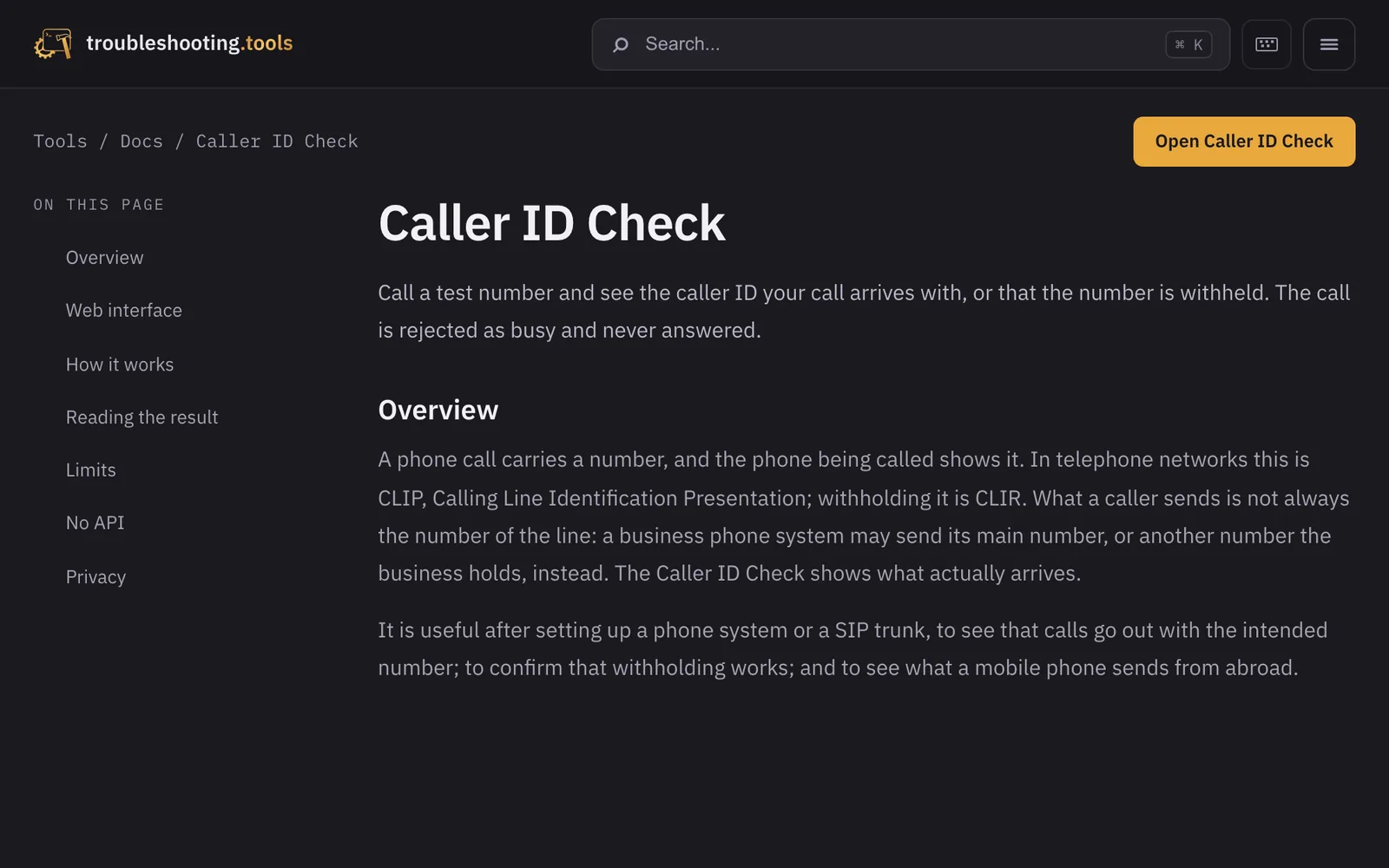
Call a test number and see which number actually arrives, or that it is withheld, with no account and no app.
Since
2026
Part of
troubleshooting.tools
Technologies
The Challenge
Whether a line transmits its own number correctly is hard to check alone: you need a second person or a second phone. After setting up a phone system or a SIP trunk it often stays unclear whether the intended number arrives, whether withholding works, or whether the system sends a different number altogether.
The Solution
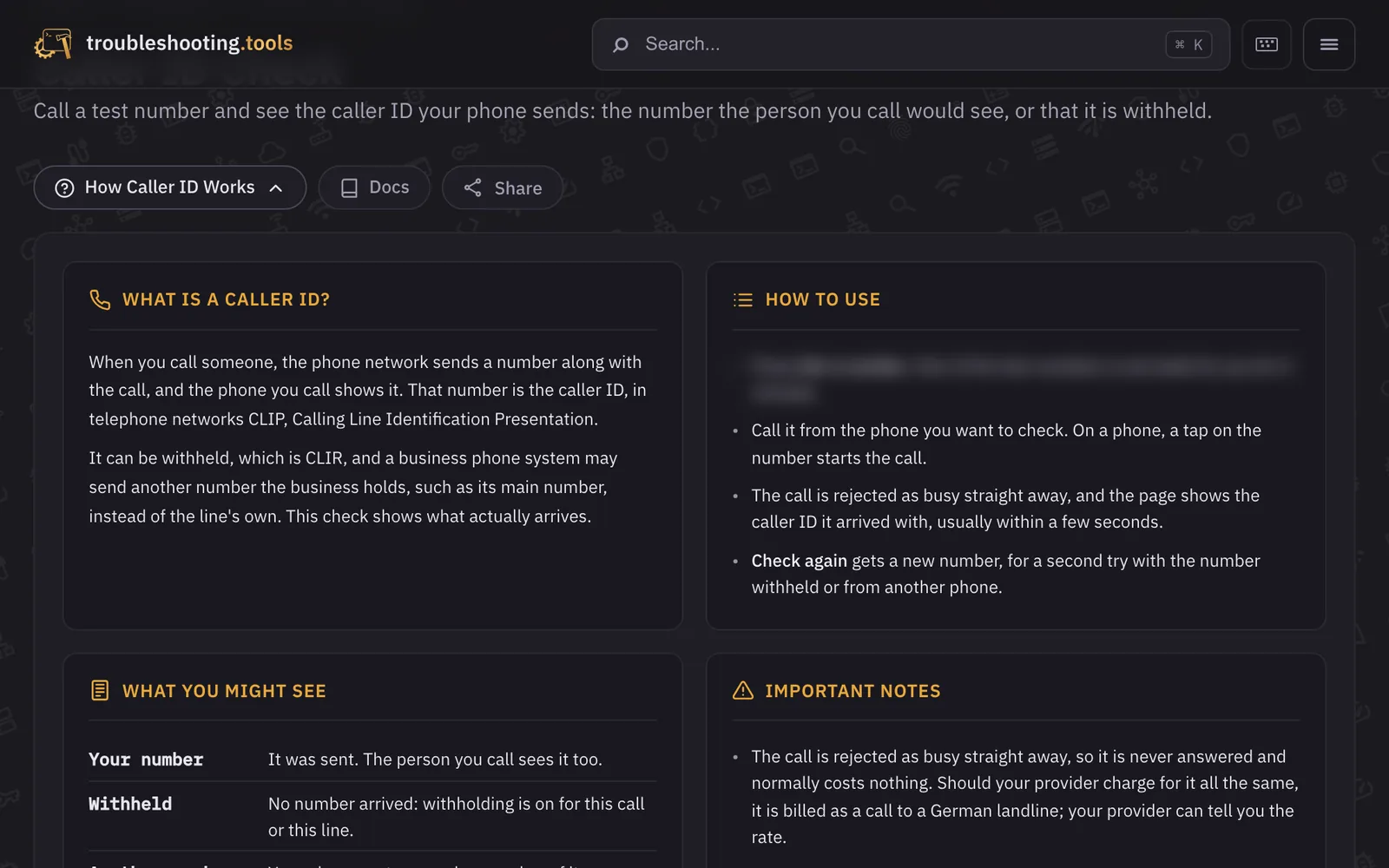
The tool reserves a test number for exactly one browser tab and ties a real call to that tab through a random token. The call is rejected as busy straight away, never answered. The page shows the value as it was transmitted and, next to it, its reading against the numbering plan: country, line type, validity and every written form.
How a test runs
Reserve a number
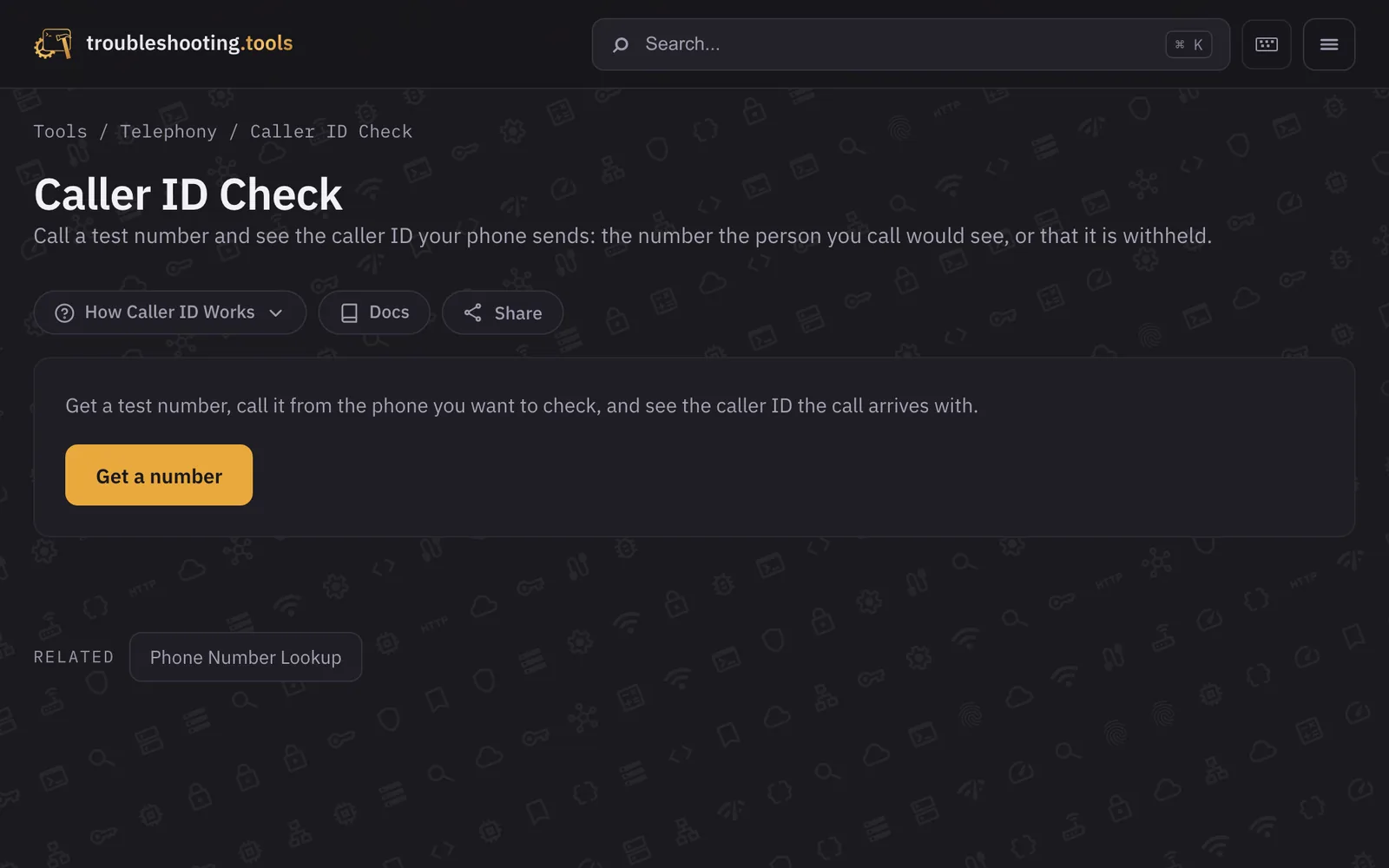
“Get a number” briefly reserves a German test number for this tab and shows it internationally as a tap-to-call link and in German notation. An address only ever holds one number.
Call, rejected
The call reaches the telephony provider, which reports it to the site, and is rejected as busy. It never reaches a person and normally costs nothing. The first call to a reserved number is the one that counts.
Read the result
“Withheld” for an empty or anonymous ID, otherwise the value as it arrived, plus country, line type and the international, national and E.164 forms. Numbers outside the plan get a notice, typical for systems that send a number of their own.
Reservation and token
A random token ties the incoming call to exactly the tab that requested the number. “Check again” starts over with a new number, “Cancel” returns it early, and closing the page frees it as well. When all numbers are taken, the answer says when one becomes free. Without the required configuration the tool switches itself off instead of half working. There is no public API.
Numbering plan data
Country, line type and written forms come from Google's libphonenumber, via its JavaScript port libphonenumber-js (MIT licence). The library is loaded from the site itself, and only once a number is reserved. If it does not load, the result still appears with less detail. A weekly job takes new releases only once they have been public for a while and pass checks.
Platform and operations
The tool runs on the same platform as every tool on troubleshooting.tools: plain PHP behind nginx in one Docker image, a shared layout and router, a strict Content Security Policy per route and no CDN. GitLab CI tests every branch, builds the images with Docker-in-Docker and deploys them; structured logs and external uptime checks monitor operations.
Privacy
There are no accounts. The caller's number is shown only to the visitor who reserved the test number, and then removed from the tool's temporary store, after two minutes at the latest. Test numbers are reserved only briefly, and calls are never answered. For the rate limit only a keyed hash of the address is stored, never the address itself. The call is received by a telephony provider. The page loads nothing from third parties.
Results
A test that uses a real call to show which number actually arrives, without a second person, account or app, and that keeps the transmitted value cleanly apart from its reading.
Gallery
Screenshots of the public site with example targets.