Radio Registry
An international directory of licensed radio stations built from the publications of national regulators: one data model across APIs, HTML registers, Excel files and PDF tables, multilingual from German to Japanese and Arabic.
Since
2026
Scope
Importers, data model, website and operations
Technologies
The Challenge
Which radio stations officially exist in a country, on which frequency, at which site and who holds the licence is published by the national regulators themselves: in open APIs, behind web applications, in paginated HTML registers, Excel files or PDF tables, each source in a different format. A larger radio project lacked exactly this reliable layer; details such as the provider had been patchy free text.
The Solution
radio-registry.org brings the official data into one model: one importer per regulator, facilities with frequency, band, site and operator, grouped into logical stations. It was meant as a module for a larger radio project, the official skeleton beneath the flesh of streams and logos. The module grew far enough to get a public website of its own; the original project takes the data through an internal interface.
From regulator document to station page
One importer per regulator
Open REST and OData APIs, JSON interfaces behind regulators' web applications, paginated HTML registers, Excel and CSV. Several sources are merged on a shared key, for example technical frequency data and the licence list.
PDF by word coordinates
PDF tables are split into columns using the word coordinates from pdftotext. The frequency serves as the anchor, because the columns shift from page to page.
Logical stations
Facilities of one brand are grouped into a station, by call sign or by name depending on the country. Name, call sign and URL are derived deterministically; if a URL changes, the old one redirects with a 301.
Multilingual
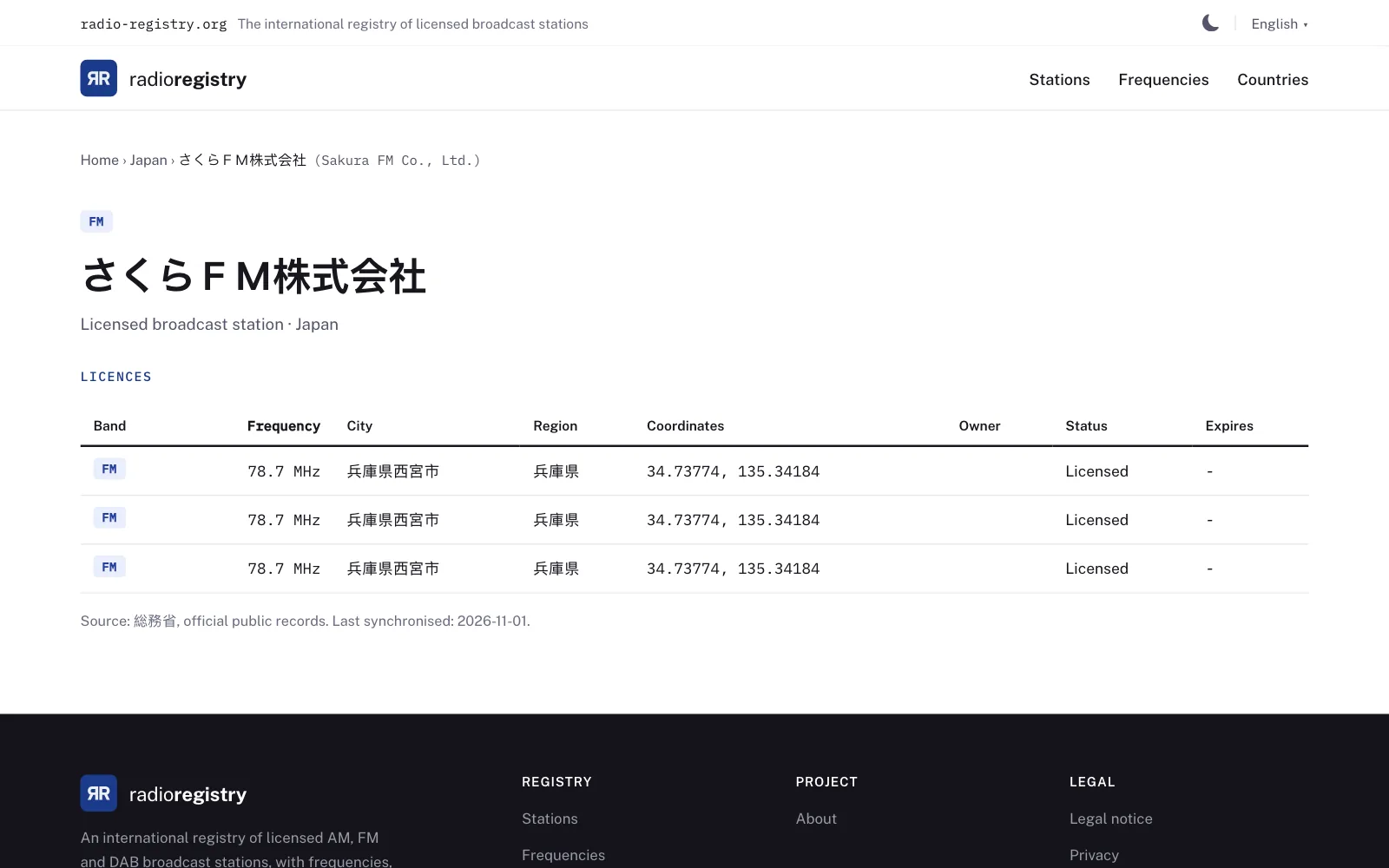
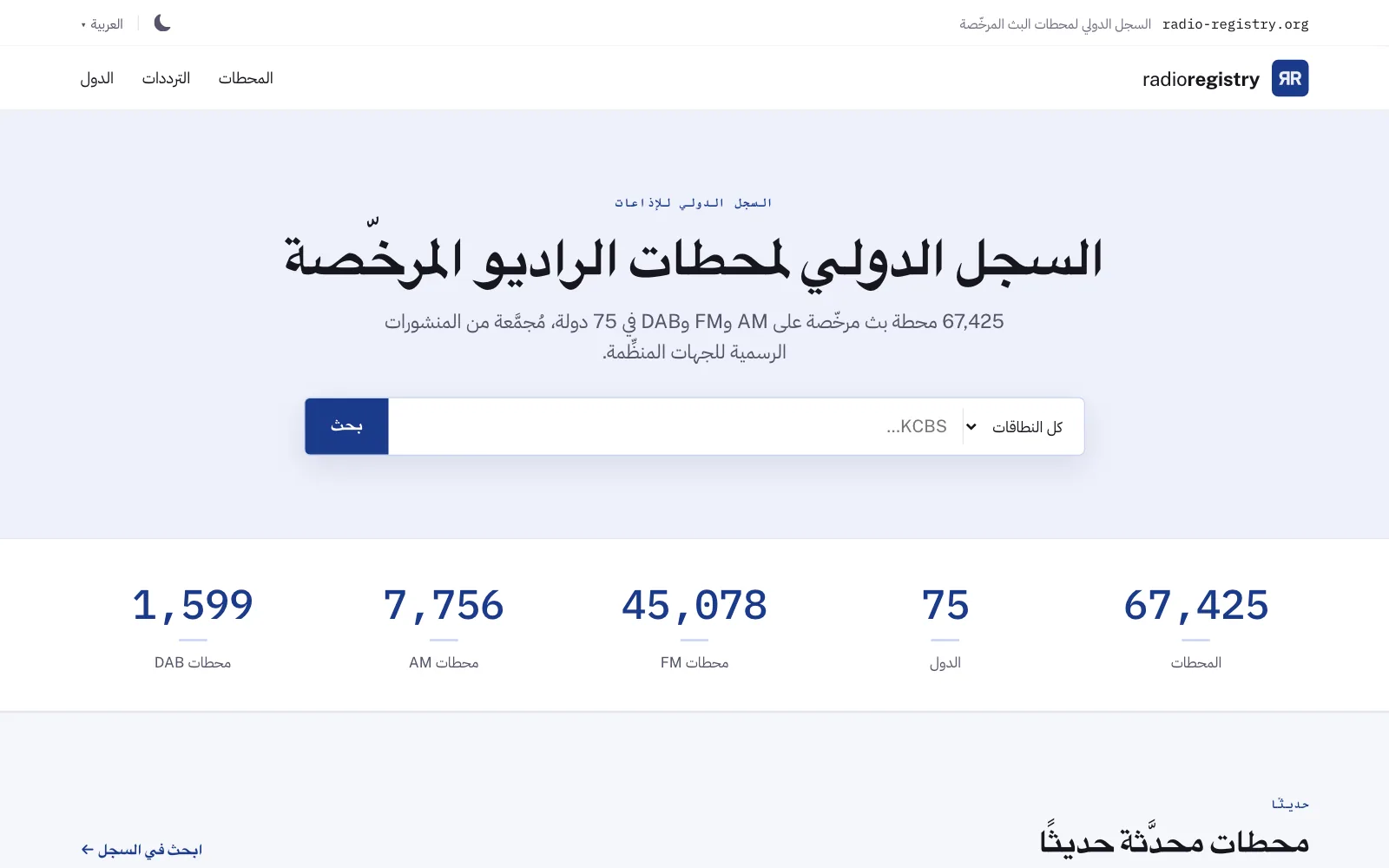
The interface is available in German, English, French, Spanish, Portuguese, Dutch, Japanese and Arabic, each language with its own URLs and hreflang, Arabic with a full right-to-left layout. Non-Latin station names get a Latin transliteration and an English translation from a self-hosted translation engine; where the regulator publishes an English name, it takes precedence. Search finds names regardless of accents and script.
Sync with a safety net
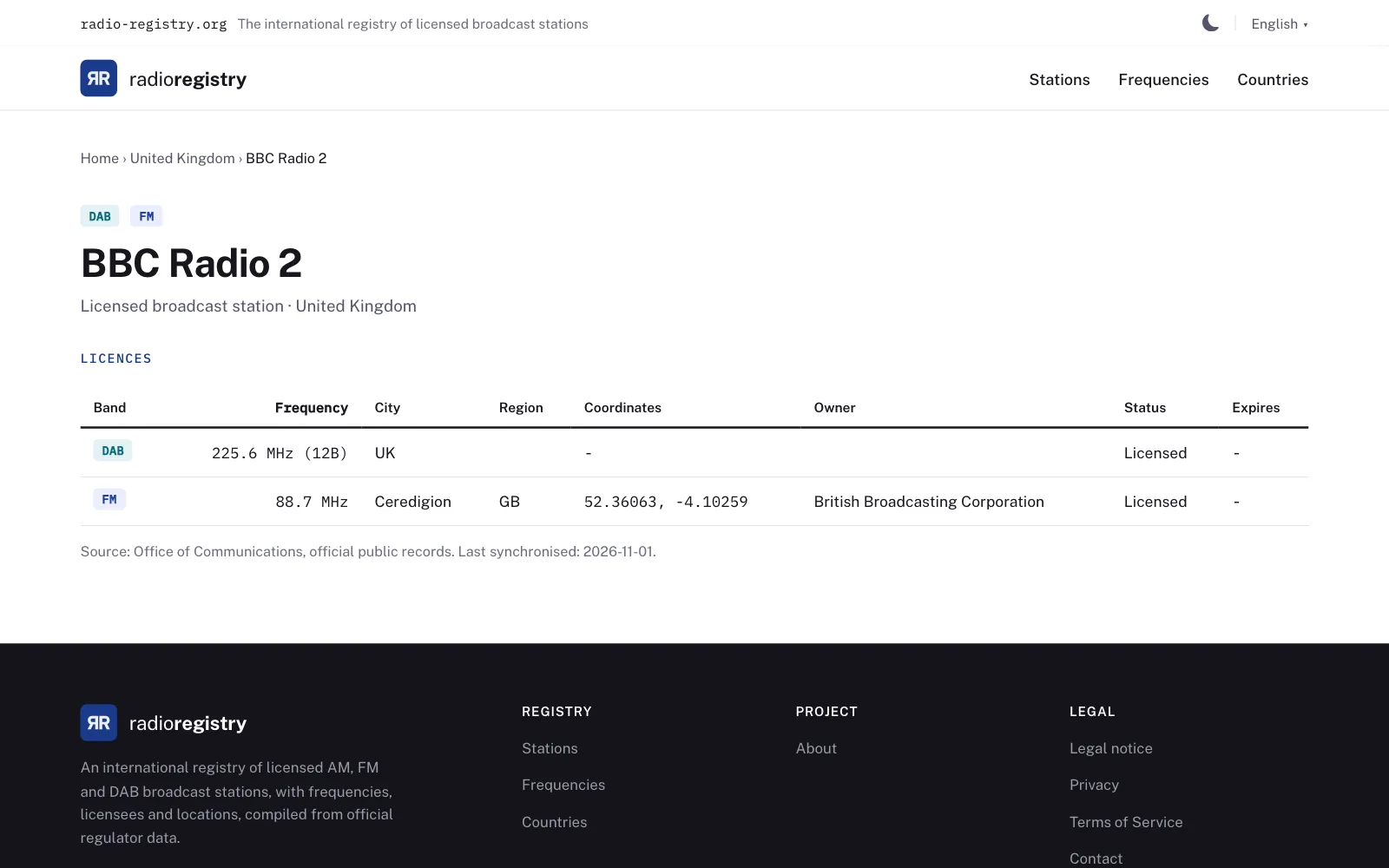
All importers run monthly. Every import is preceded by schema and plausibility checks, detection of frozen sources and a database snapshot; an e-mail summarises the run. Known outages of single sources are recorded as expected, with an expiry date, so they do not stop the run. Every station page names the regulator, its official register and the date of the last sync.
Technology and operations
PHP with PostgreSQL for full-text and trigram search and Redis as a cache, nginx in front of PHP-FPM, all in Docker containers behind a shared reverse proxy. The interface is rendered entirely on the server: forms, consent and theme choice are plain POST forms, and the Content Security Policy allows no scripts. Stable URLs, XML sitemaps, Schema.org and Open Graph open the site up to search engines. GitLab CI builds an image for every service, a push to main deploys automatically, secrets are added only at runtime, and when the data build changes, the pipeline rebuilds the station index.
Privacy
There are no accounts. Analytics are measured server-side by self-hosted Matomo and only after consent; Do Not Track and GPC are respected. Fonts and the world map are served by the site itself. Contact details of people that some regulators publish alongside are not imported.
Results
A module has become a public register in its own right: official data from very different sources, prepared uniformly, multilingual and opened up to search engines with stable URLs, sitemaps and structured data.
Gallery
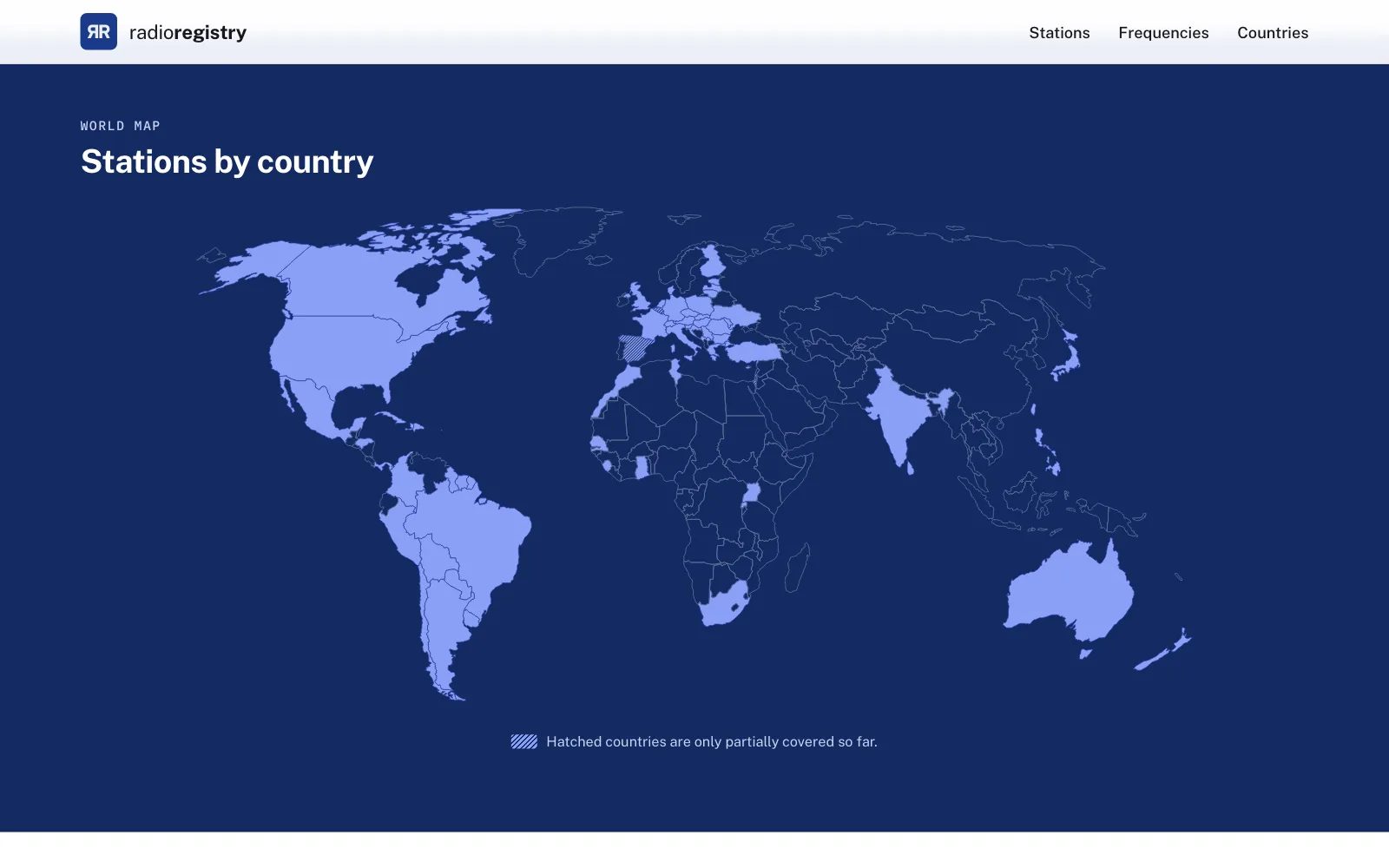
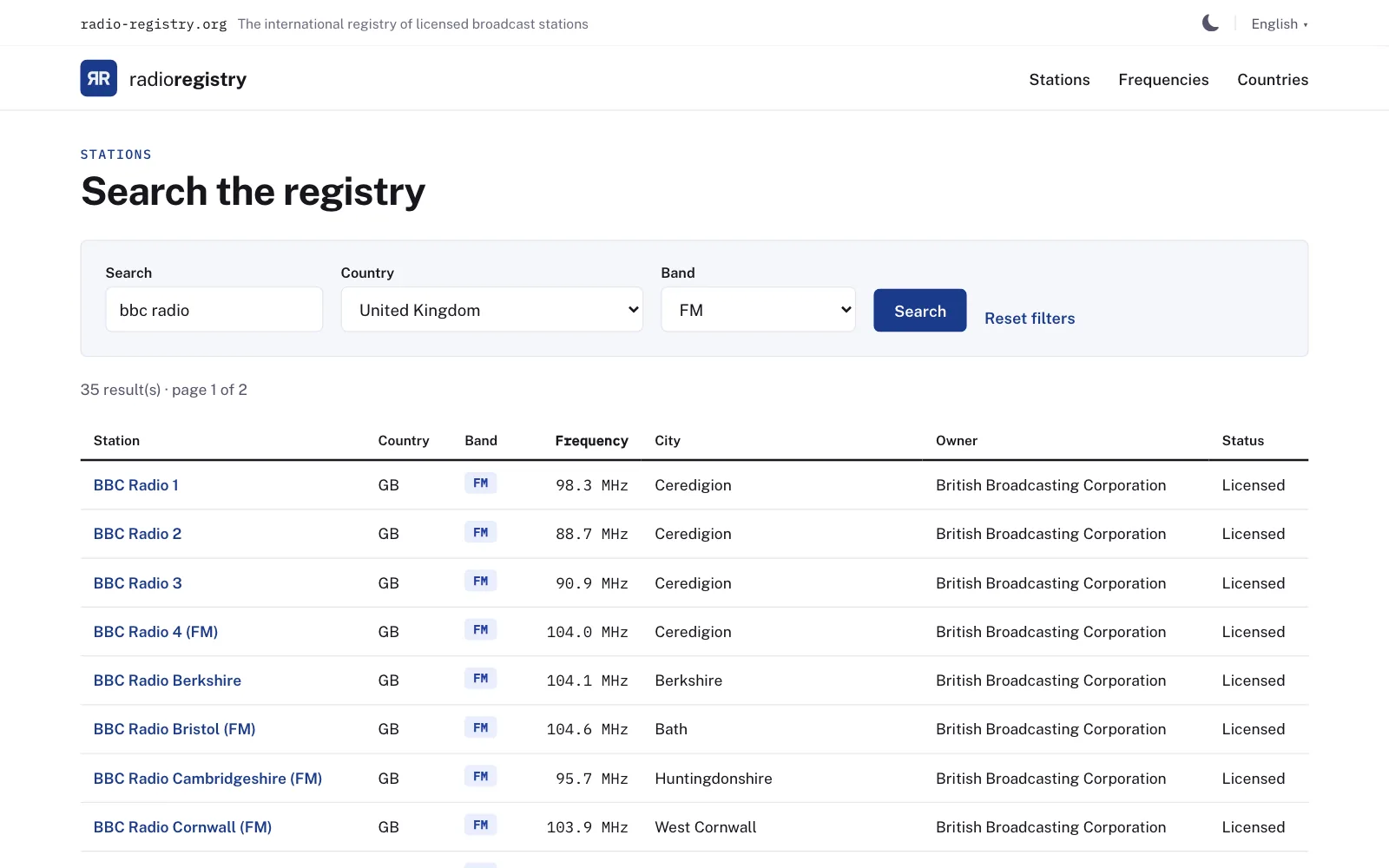
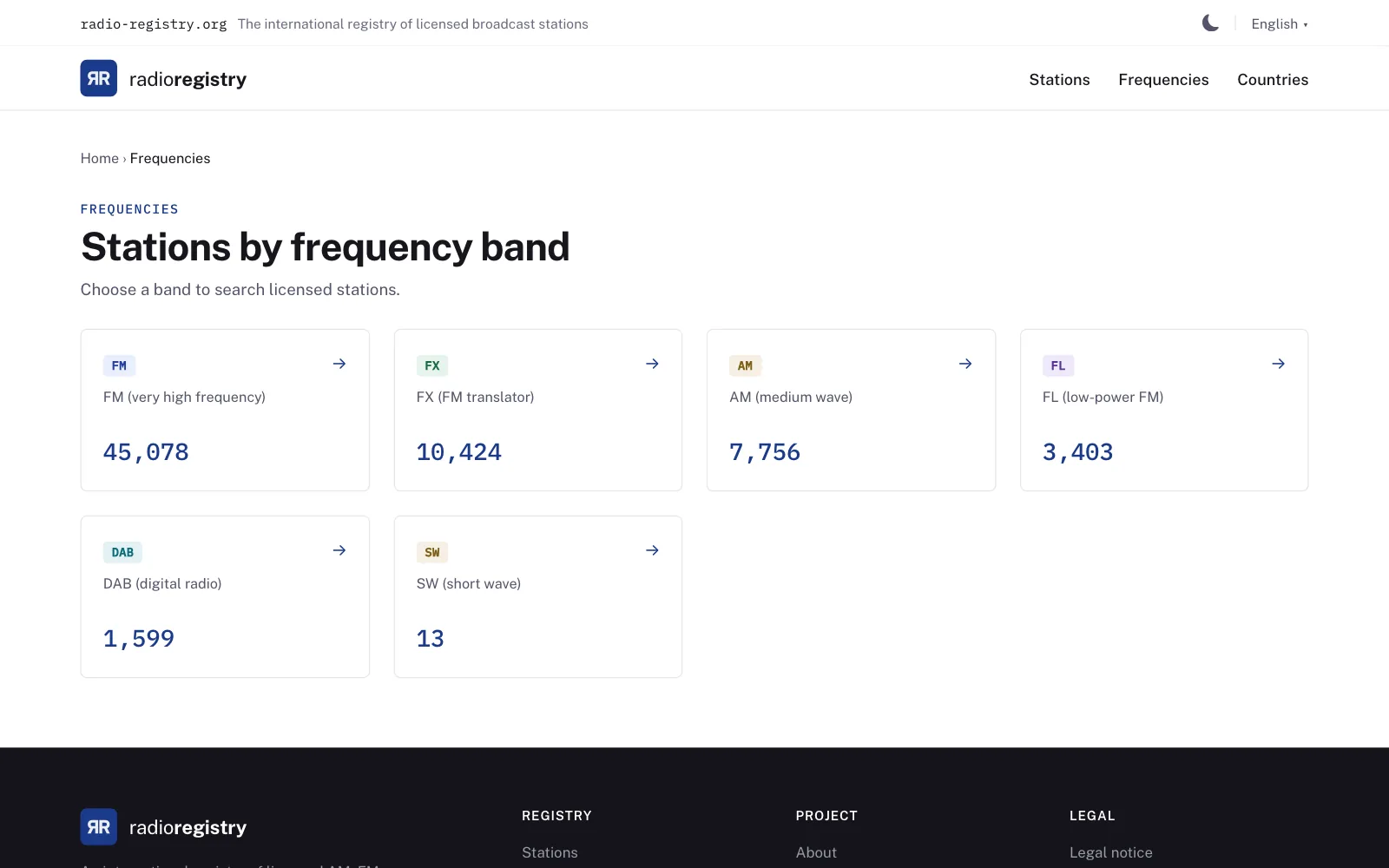
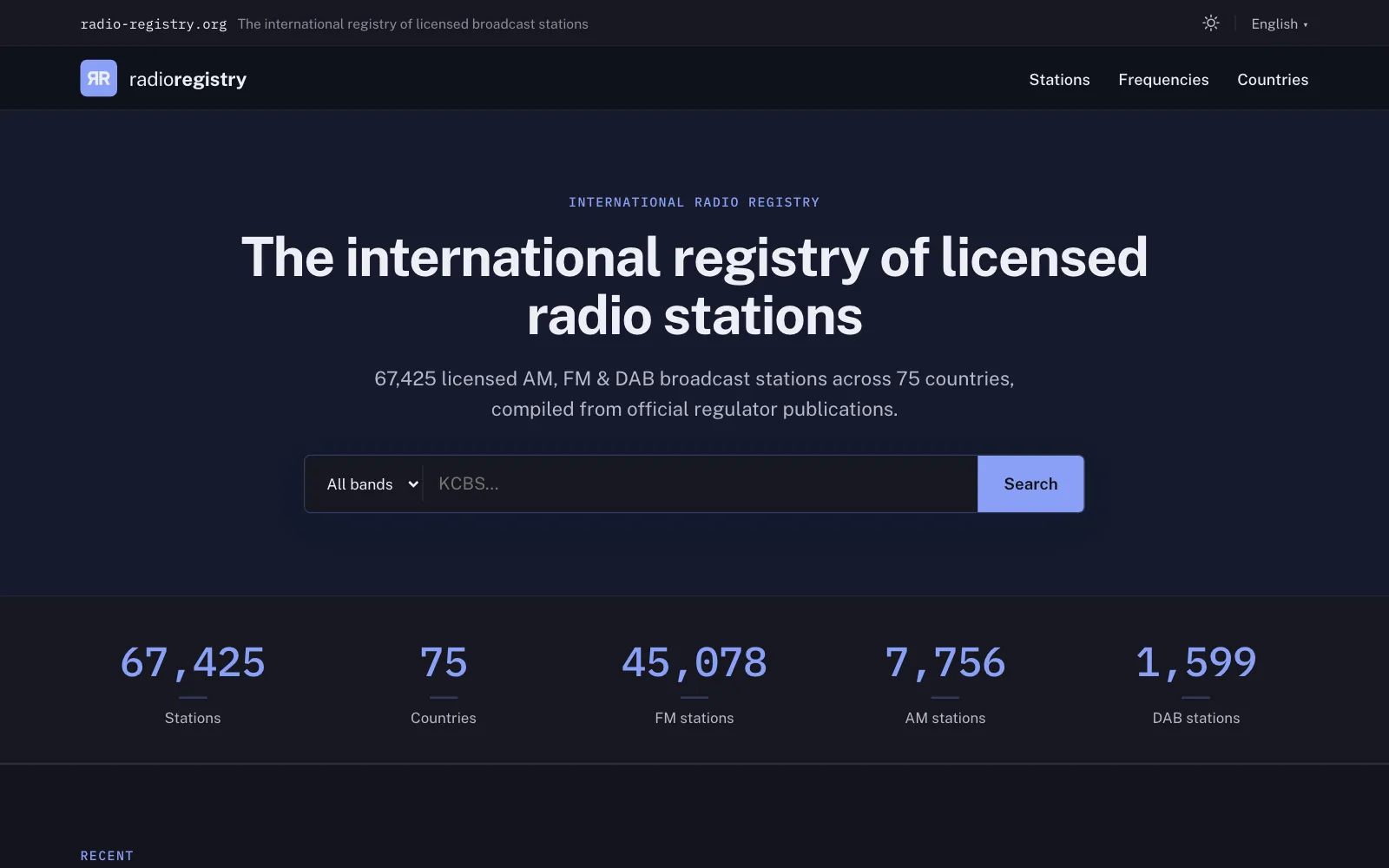
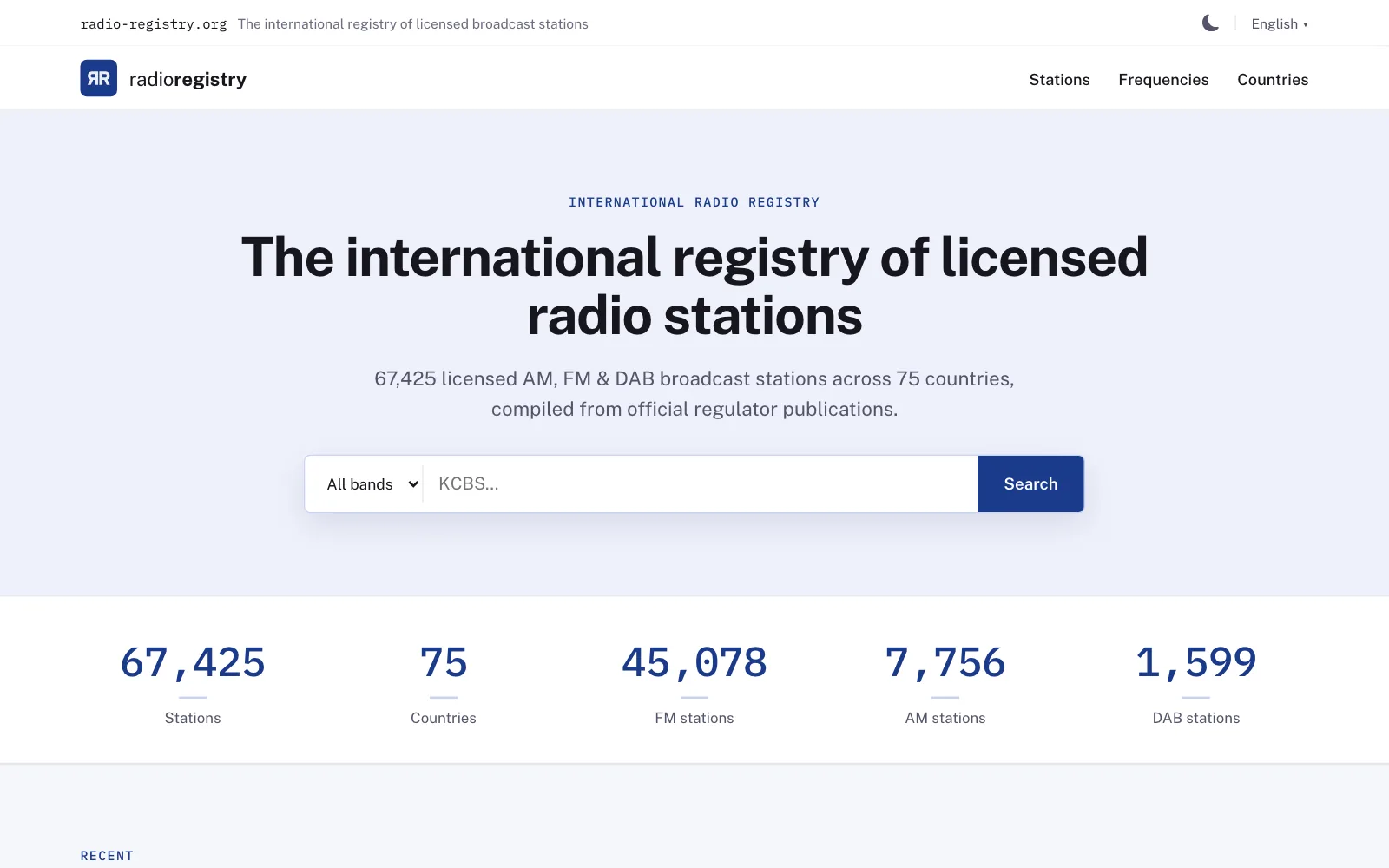
Screenshots of radio-registry.org.