DNS Lookup
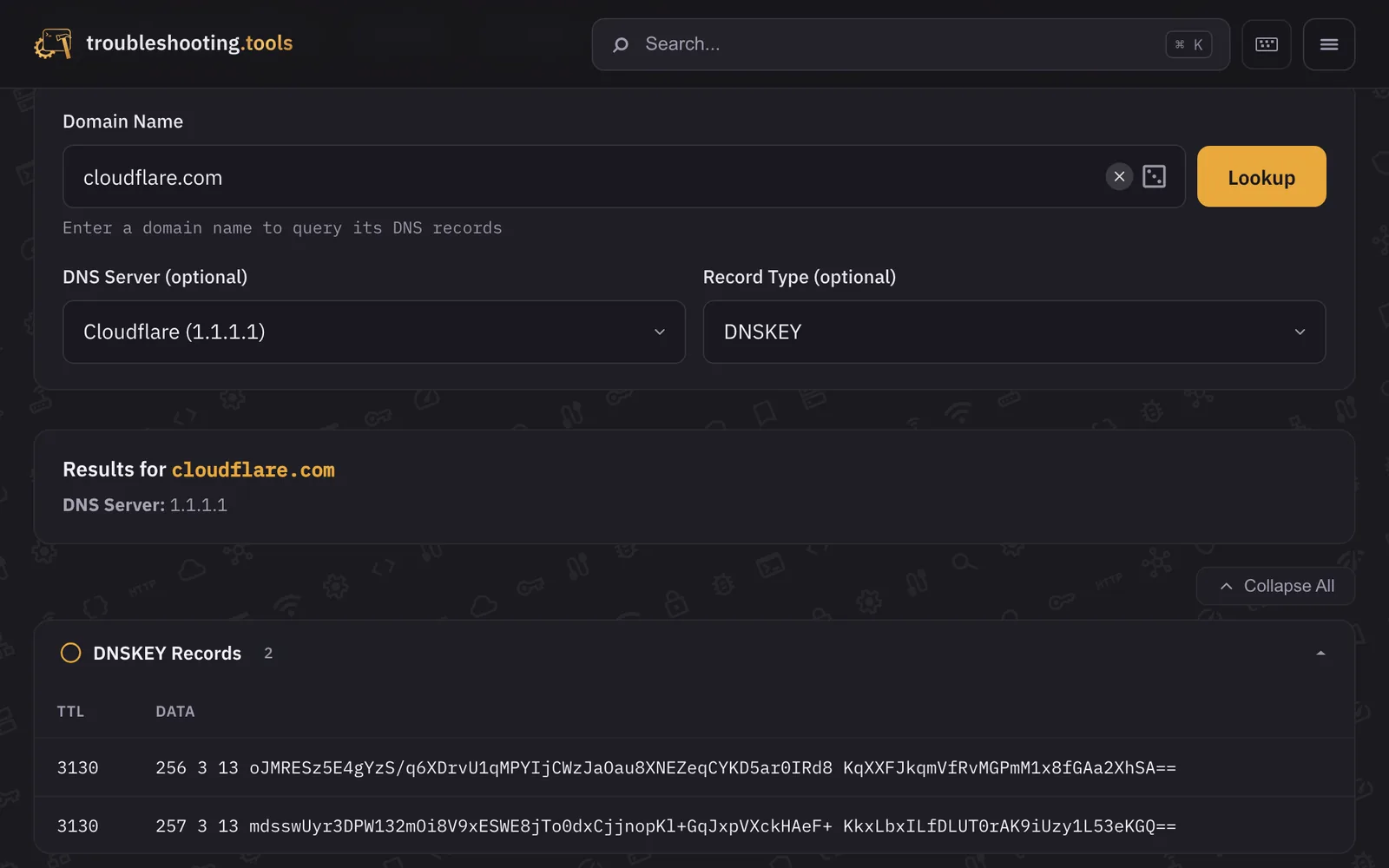
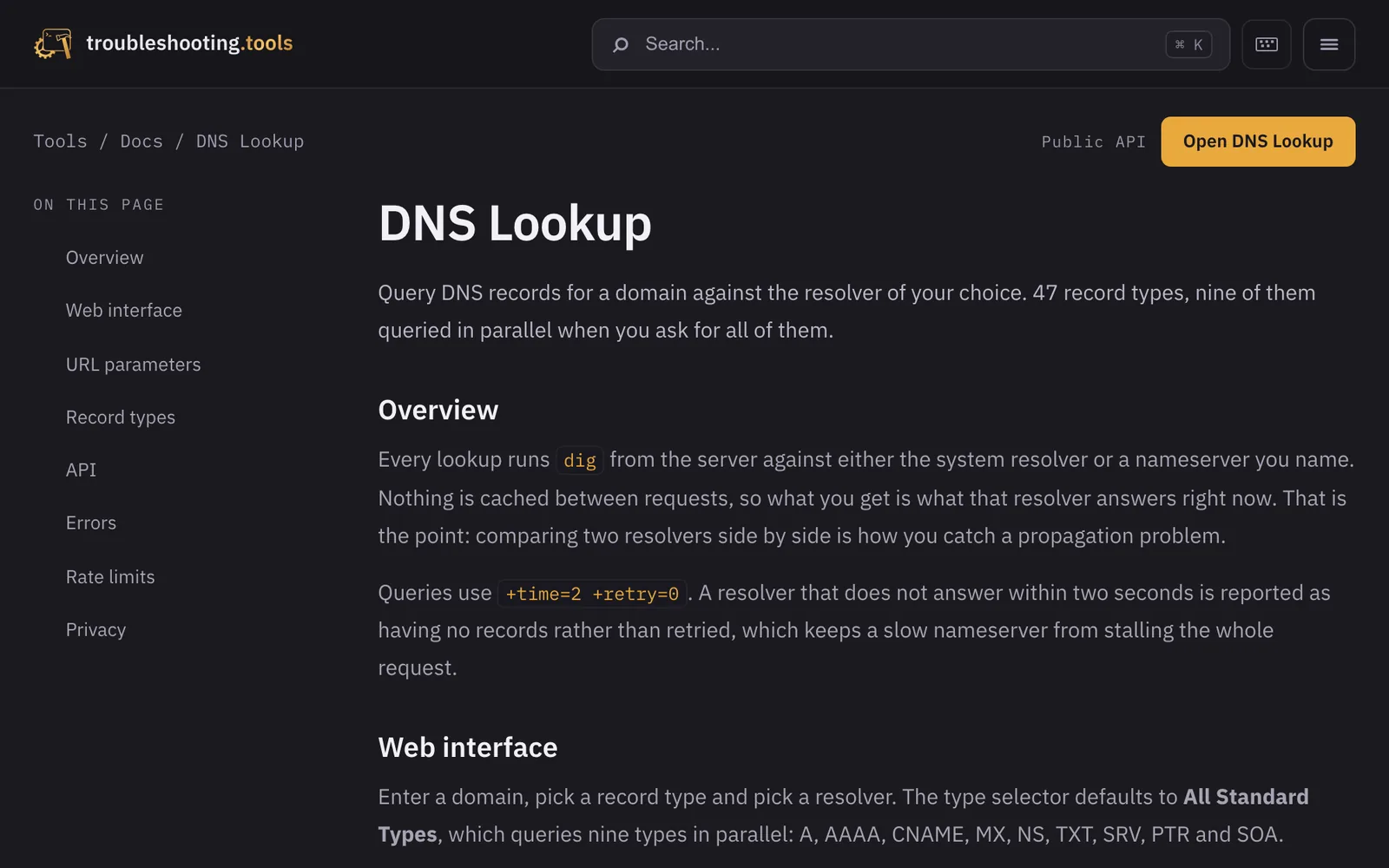
47 record types including DNSSEC, a resolver of your choice, results linked to each other and a JSON API.
Since
2024
Part of
troubleshooting.tools
Technologies
The Challenge
DNS problems often show up only on one resolver or for a rarely used record type. Many web lookups only know A, MX and TXT, reject names with an underscore such as _dmarc or international domains, and show results that can neither be shared nor compared against another resolver.
The Solution
The tool queries 47 record types, from A to DNSSEC, HTTPS/SVCB, TLSA, SSHFP and ZONEMD. The resolver is chosen per query and kept in the link, so the same name can be compared across resolvers. Underscores and international names work, and the results link to each other.
How a query runs
dig on the server
The server calls dig with a short timeout and no retry, every argument safely escaped. A slow resolver cannot stall the request.
“All standard types” in parallel
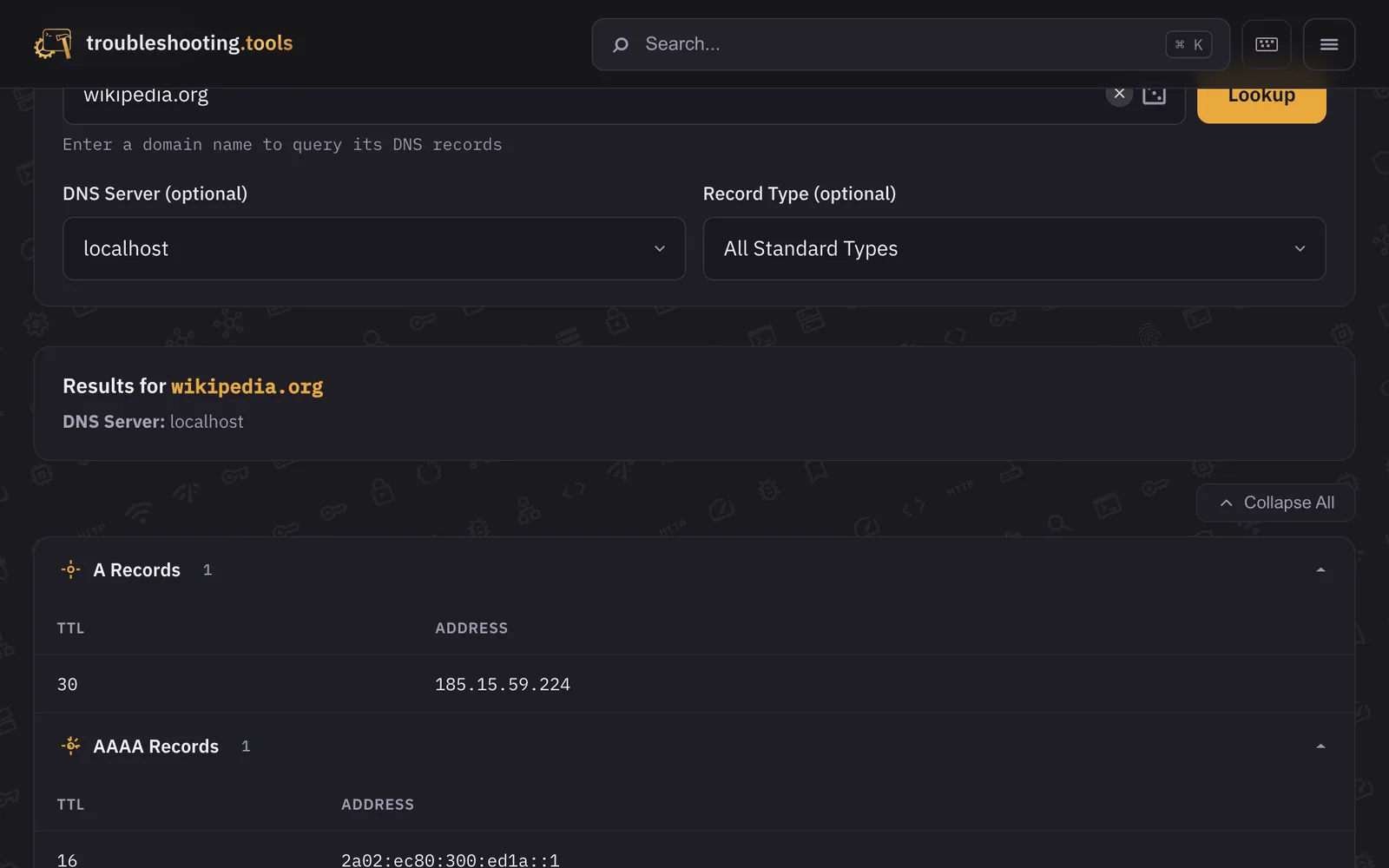
A, AAAA, CNAME, MX, NS, TXT, SRV, PTR and SOA run as nine parallel dig processes. Other types are checked against a fixed list first.
Linked results
Addresses open the IP lookup, names open a new DNS lookup, and the SOA contact is decoded into an e-mail address. Shared links show the actual records in their preview.
API
The API answers as compact JSON with domain, resolver and the records per type, without a key and with open CORS. There are paths for domain, domain and type, and domain, type and resolver. Validation errors come as HTTP 400 with a list of messages. Page, link preview and API use the same functions; the page builds previews in its own process without requesting itself over HTTP.
Names that fail elsewhere
The page strips https://, www. and paths from the input and converts international names to Punycode in the browser. Names with underscores such as _dmarc or _submission._tcp are allowed; the old check rejected them, which made DMARC and SRV lookups impossible.
Platform and operations
The tool runs on the same platform as every tool on troubleshooting.tools: plain PHP behind nginx in one Docker image, a shared layout and router, a strict Content Security Policy per route, every resource served by the site itself. GitLab CI tests every branch, builds the images with Docker-in-Docker and deploys them; structured logs and external uptime checks monitor operations.
Privacy
The server makes the query, not the visitor: the chosen resolver only sees the server. Queried domains appear in the server log. The page loads nothing from third parties, no map, no embeds. Analytics only with consent through self-hosted Matomo.
Results
The DNS lookup from 2024 has become a tool that also covers DNSSEC, modern record types, service names and international domains, and makes resolvers comparable side by side.
Gallery
Screenshots of the public site with example targets.