Deezer Track Lookup
Resolve a Deezer track ID or link: title, artist, album, year, duration and cover, as a stable link with a pre-rendered preview or through a JSON API.
Since
2025
Part of
troubleshooting.tools
Technologies
The Challenge
Anyone working with streaming catalogues often has only a bare track ID or a link and wants to know quickly which recording is behind it. Simple wrappers around the Deezer API report success even though Deezer returns an error object with status 200 for a missing track, and shared links show no useful preview in messengers.
The Solution
The tool accepts an ID or a full Deezer link, queries the public Deezer API and checks even status-200 answers for an error object. Stable links are rendered on the server with the answer, so the page arrives filled and link previews show title, artist, album and duration.
How a lookup runs
ID or link
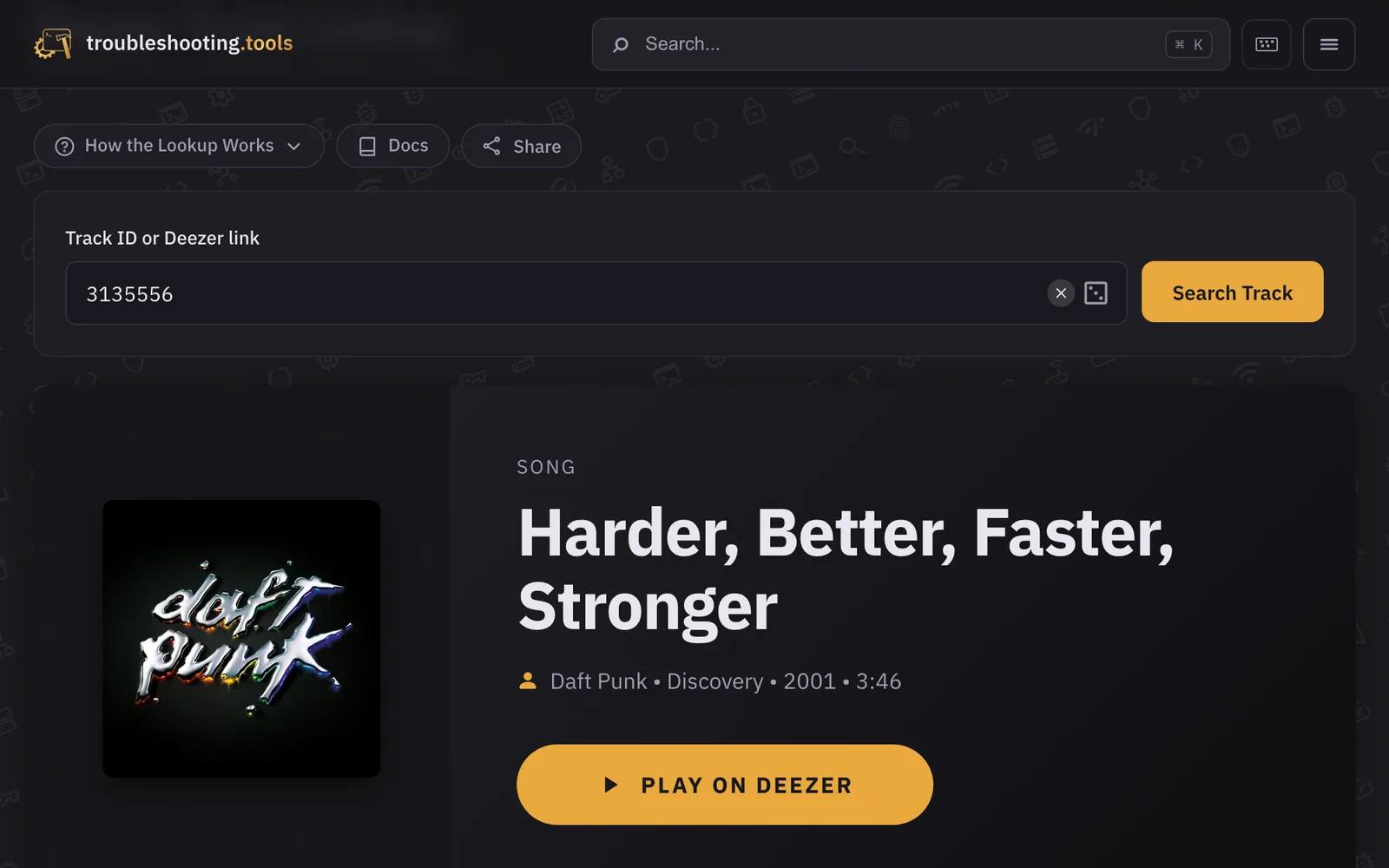
A track ID or a Deezer link with or without a language segment, including share links from the app, which the server follows; upper or lower case does not matter. There is deliberately no search by title.
Query from the server
The server queries the public Deezer API without a key, with hard timeouts, so a stalled Deezer cannot hold the page or the preview. Answers with an error object count as not found, and found tracks are cached. Outbound requests are guarded and fail closed.
Result
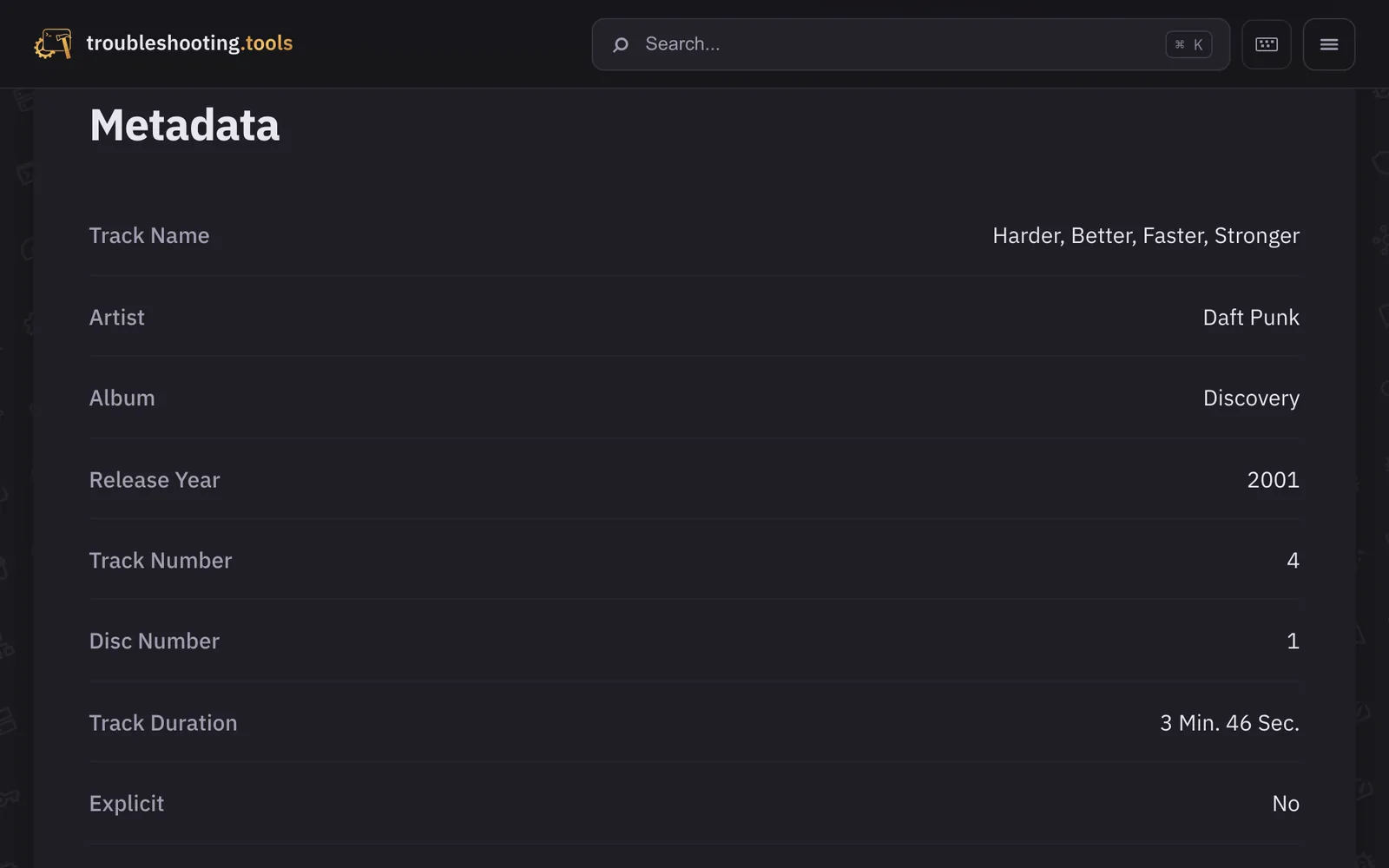
A card with cover, title, artist, album, year and duration, plus copyable fields for title, artist, album, year, track and disc number, duration, explicit and ID. “Play on Deezer” asks before leaving the site.
Stable links and previews
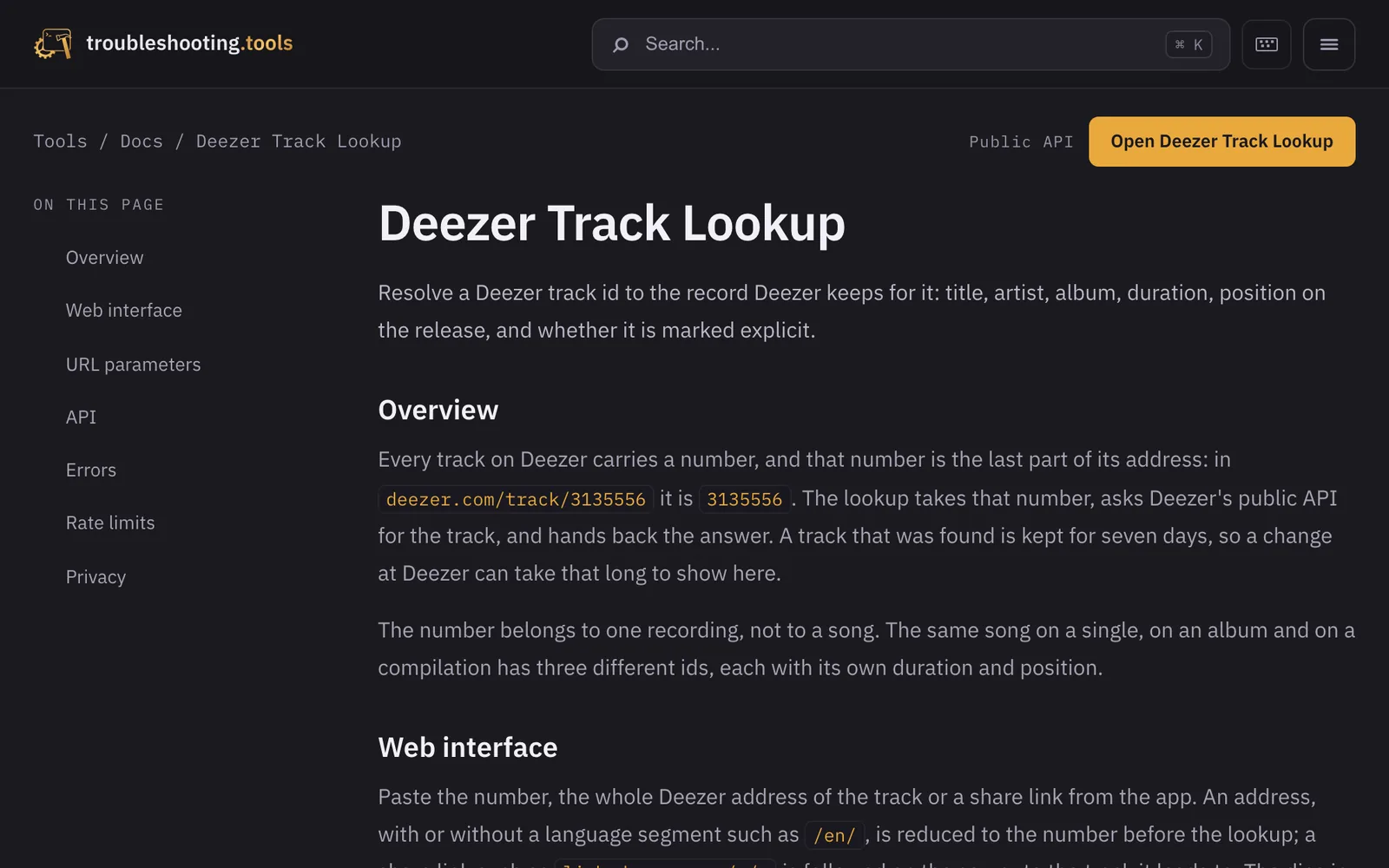
Under /lookup/deezer/track/{id} the page is served from the server with the answer already in it; the browser makes no second request. Preview and API use the same function, so they cannot drift apart. Link previews carry title, artist, album, duration and release date. Every lookup updates the address, and back and forward re-run it. The page also explains that an ID belongs to one recording, not to a song.
API
Via GET or POST the API answers as compact JSON with Deezer's unchanged track record, without a key and with open CORS. Everything except digits is stripped from the ID. The rate limit applies per address.
Platform and operations
The tool runs on the same platform as every tool on troubleshooting.tools: plain PHP behind nginx in one Docker image, a shared layout and router, a strict Content Security Policy per route, every resource served by the site itself. GitLab CI tests every branch, builds the images with Docker-in-Docker and deploys them; structured logs and external uptime checks monitor operations.
Privacy
The server queries the Deezer API, not the visitor's browser. The cover is served by the site as well, through a signed address with limited validity; the visitor's browser does not contact Deezer. There is no player, preview clip or embed, and “Play on Deezer” opens Deezer only after confirmation. Looked-up tracks appear in the server log. The tool sets no cookies.
Results
A small, clean tool that resolves Deezer IDs reliably, recognises error answers correctly and shows shared links with real data in their preview.
Gallery
Screenshots of the public site with example targets.